Showing posts with label Presbyterians Today. Show all posts

Thursday, March 23, 2023

Blessing the animals, Presbyterian style - A service that blesses God’s critters builds community while caring for Creation

by David Bennett for Presbyterians Today | Special to Presbyterian News Service

The Rev. Laura Blank of Pleasant View Presbyterian Church in Smock, Pennsylvania, conducted a Blessing of the Animals for the first time in 2018. (Photo courtesy of Pleasant View Presbyterian Church)

Inside St. Nicholas Croatian Catholic Church in Millvale, Pennsylvania, are more than 20 murals painted by Croatian immigrant Maxo Vanka in the late 1930s and early ’40s. Many of the paintings depict the immigrant experience in America. There is one of St. Francis, though, that shows Vanka’s love of animals, especially his fondness of birds. In the painting, exotic birds can be seen encircling the patron saint of animals.

St. Francis wasn’t just the artist’s muse. Vanka took a cue from the legendary saint, caring for critters that came his way. Vanka’s granddaughter once recalled a story of how her grandfather rescued a sparrow and later taught the bird to peck him when it was time for him to wake up. She added that his grandchildren believed that the animals could talk to their grandfather.

The connection Vanka had with animals might have been viewed as unique years ago, but not so today. Many pet owners now refer to Fido or Whiskers as their “fur babies,” and the pet industry has noticed. Franchise pet stores sell luxury beds and gourmet food for animals. Doggie day care centers make sure that canines have play dates while their owners are at work. Online pet retailers offer monthly subscriptions of treats and toys to be delivered to a pup’s front door.

Pets have become a valuable part of one’s family. Just how valuable? A report by the North American Pet Health Insurance Association found that in 2018, 2 million pets in the United States were covered by health insurance — an 18% jump from the prior year.

Dr. Randall J. Hoedeman, a counselor at the Pittsburgh Pastoral Institute in Pennsylvania, speaks to “the deep connection that we can have with animals” and how they can feel very much like members of the family. On the portion of the counseling center’s intake form that asks about immediate family members, Hoedeman has noticed that clients often include the names of their pets.

“This happens with enough frequency that I now routinely ask about pets if they are not specifically mentioned,” he said, adding, “Many friends have also attested to the loss of a pet, and its related grief feeling very much like the loss of a family member.”

With so much love and joy — and even grief — that pets bring to people, more Presbyterian churches are beginning to take a page from their Catholic and Episcopal brothers and sisters by offering a Blessing of the Animals service. Traditionally held in early fall to coincide with the Oct. 4 feast day of St. Francis, these services invite members of the congregation to bring their pets to the church to be blessed.

While the service has been a beloved tradition for most Anglican congregations, Presbyterians have tended to “shy away from services of blessings,” says the Rev. Laura Blank of Pleasant View Presbyterian Church in Smock, Pennsylvania.

That is changing.

“If we declare along with the psalmist that ‘the Earth is the Lord’s and all that is in it,’ we understand that God has already blessed and continues to bless Creation. Having a service like the Blessing of the Animals invites us to recognize that God is the one who blesses,” Blank said, adding that such a service also helps people “take seriously our role as stewards of Creation.”

Playing a more serious — and active — role in the care of Creation is one of the reasons that a service for Blessing of the Animals was included in the 2018 revision of the Book of Common Worship (BCW), says the Rev. Dr. David Gambrell.

Gambrell, the associate for worship in the PC(USA) Office of Theology & Worship and co-editor of the BCW, explained that the animal blessing was part of the new “Creation and Ecology” section, reflecting the denomination’s “expanded ecological awareness.”

“There’s a desire to be good stewards of God’s Creation and good neighbors to the other creatures that share our earthly home,” said Gambrell.

The Rev. Dr. Kimberly Bracken Long, the former co-editor of the BCW, agrees with Gambrell, adding that such a service “reflects one facet of our giving thanks for, and being good stewards of, all the gifts of Creation.”

Gambrell said he imagined the Blessing of the Animals service to be used with “household pets, farm animals — or even as a way of seeking God’s blessing for wild creatures and endangered species.”

Beautiful blessings

Blank, whose congregation is exploring becoming a PC(USA) Earth Care Congregation, led its first Blessing of the Animals last October. Using the liturgy in the BCW, Blank not only wanted to give thanks for the pets in people’s lives, but she also wanted those attending to connect with nature. The service was held outdoors on a Sunday evening underneath Pleasant View Presbyterian’s pavilion. The service, Blank says, was a natural fit for the church’s context.

“Our congregation includes farmers, folks who worked at vet clinics and feed supply stores, as well as many folks who dearly love their house pets,” Blank said. The church, too, was used to working with animals as it holds a live Nativity each Advent. Admittedly, the stars of the Nativity are not Mary, Joseph and baby Jesus, but rather Fenn the goat and Diego the donkey, Blank said, laughing.

Still, Pleasant View Presbyterian made sure to set a few ground rules for its Blessing of the Animals.

“To keep the peace between all creatures great and small, we asked that pets remained on leashes or in carriers,” Blank said. “We wondered if fur would fly, but all participants behaved — human and animal alike.”

Leading up to the service, Pleasant View Presbyterian also held a collection for donations to a local animal shelter.

“As we thanked God for blessing our homes with our pets, we wanted to bless animals who had no home. We had a table heaped high with donations,” Blank said. “The youth delivered the supplies to the shelter and then spent time with the animals, extending the blessing beyond the worship service.”

Blank said that the Blessing of the Animals was also an opportunity to connect with church members who rarely attend on Sunday morning.

“This service honored an important part of their life. Even some folks without pets came, just to experience the fun,” Blank said.

Last October, the Rev. Kelly Jean Norris of Kerr Presbyterian Church in Verona, Pennsylvania, incorporated the Blessing of the Animals liturgy into the traditional Sunday morning worship slot, but she also moved the service outdoors.

“The congregation was very enthusiastic,” Norris said. Not only were animals invited, but church members were asked to bring a photo of either their deceased pets or pets who do not travel well.

“It was a beautiful way to address the grief of losing a loved animal, and to include those pets with special prayers and blessings who could not be there physically,” she said.

The animal blessing was also an unexpected and powerful moment of healing for Kerr Presbyterian.

“The church had suffered several tragic losses in the past year, and so the Blessing of the Animals was, in a way, pet therapy. It was especially welcomed by the large percentage of pet owners in the congregation,” Norris said.

While Kerr Presbyterian blessed the animals within their traditional Sunday worship slot, some congregations choose to do it as a stand-alone service like Pleasant View Presbyterian’s, or make the blessings an ecumenical opportunity, extending further out into the community.

The Blessing of the Animals is an ecumencial event at East Liberty Presbyterian
Church in Pittsburgh. Retired United Methodist pastor the Rev. Joe Hajdu and retired Presbyterian pastor the Rev. Henk Bossers have been coming together for several years to bless the animals in the community. (Photo courtesy of East Liberty Presbyterian Church)


At East Liberty Presbyterian Church in Pittsburgh, retired United Methodist pastor the Rev. Joe Hajdu and retired Presbyterian pastor the Rev. Henk Bossers have been coming together for several years to bless the animals in the community. On the steps leading up to the church, except for two times when rain forced everyone inside, Hajdu and Bossers wear stoles with embroidered animals on them as they share God’s blessings with four-legged, finned or winged worshipers. And even though the service is a hit with children and teens, the pastors say it is a service that resonates with all ages.

“There have been far more adults than children who come,” Hajdu said.

At Pleasant View Presbyterian, though, Blank sees the Blessing of the Animals worship as “especially meaningful for the young people” in the congregation.

“For them, they see all of God’s creatures as worthy and important. It is the children who lift prayers for sea turtles and manatees during worship. It is the children who gather in my office every Sunday before worship to feed my pet fish. This service fully engaged all generations, but it especially engaged our young people,” Blank said, adding a final word of advice to churches considering such a service: Expect the unexpected.

“In true ‘PK’ (pastor’s kid) fashion, my dog, Bowie, was the worst-behaved there,” Blank said, laughing.

A blessing for animals

Almighty and everlasting God,

Creator of all things and giver of all life, let your blessing be upon all these animals.

May our relationship with them mirror your love, and our care for them be an example of your bountiful mercy.

Grant the animals health and peace.

Strengthen us to love and care for them as we strive to imitate the love of Jesus Christ our Lord and your servant Francis.

Amen.

— From the Book of Common Worship (2018), A Service for the Blessing of the Animals

Tuesday, September 13, 2022

Church in the digital age - Measuring, and understanding, online worship metrics

I recently discussed the idea that many, perhaps most, of our congregants are not worshiping exclusively online or in person but are switching back and forth. This post-Covid phenomenon brings us to the discussion of how we can measure who is worshiping with us.

If your online worship uses Zoom, you can simply count the faces on your screen. But if you are streaming your worship to Facebook, YouTube or through your website, interpreting the metrics is trickier.

Finding the data isn’t always obvious. To get attendance numbers, you must know how to navigate online sites. On YouTube and Facebook, when you are logged in as a page administrator, look for the “Creator Studio.” Then within the Creator Studio, on Facebook you look for “Insights,” while on YouTube it’s called “Analytics.” You then must look for your individual videos to get their statistics, or else you’ll be seeing aggregate numbers for your page or channel.

What are the meaningful metrics? Most metrics are geared toward commercial advertisers. But the number I look for is the “maximum concurrent viewers” during our livestream. During a worship service, they track how many devices are watching. The peak number is the maximum concurrent viewers. That way the number will largely be unaffected by those who come across the service, watch for a few seconds, then move on. However, this only counts who is watching during the live service.

We use it because we have volunteers monitoring and engaging in the “live chat” (on Facebook it’s commenting) during the service. A person watching live has an opportunity for interaction that is not present during a replay. This is an important aspect of community building, so it is the metric we prefer.

Others want to count after-service viewers as well. But since the count of “views” includes anyone who watches even a few seconds, a better estimate is to take the total number of minutes viewed and divide by the length of the service. The result isn’t precise, but if your recorded service is 60 minutes long and it was watched for a total of 1,200 minutes, counting this as 20 full views is a reasonable approximation.

How do you correlate the number of devices to the number of people? There is no sure way. Both a person watching alone and a family gathered around a computer screen register as one device. Attempts to equate the number of devices to a number of people will use a multiplier. Various studies of online church services have shown that a very popular figure is 1.7. If you multiply the number of devices by 1.7, that’s a good estimate. For example, 20 devices times 1.7 corresponds to 34 people.

What about other metrics? They give you an idea of how many people might be learning that your church exists. The two most common measures are “reach” and “impressions.” Reach is the number of unique people who were presented with your post in their feed. Impressions is the number of times your post appeared. So, if a person sees your post three times, that is one reach and three impressions.

Impressions matter. For decades, advertisers believed that a person must see an ad at least seven times before they might respond. Currently, as we are bombarded with ads, research suggests an ad would have to be seen 10–20 times before it is remembered. This is why Facebook counts “three-second views” of videos. You might think, “Three seconds? Does it matter if someone only watches three seconds?” Three seconds is enough time for the person to realize what they are watching. Even if they move on, in three seconds they’ve come to know that your church exists. Eventually, awareness can lead to connection.

Use metrics to look for trends. In my congregation, we are using metrics to look for larger trends and ignoring the weekly fluctuations. We are discovering, overall, that our online presence is slowly growing. Second, we basically know that our online attendance remains larger than our in-person attendance. Third, we watch our reach and impressions numbers to see that we’re laying the groundwork for future growth.

While the days of only counting bodies in the pews are fading, keeping track of church metrics does not have to be complicated — or overwhelming. Know what you’re measuring. Look for direction, not precision. Have strategic goals, and the data can help you know whether you’re achieving them.

Richard Hong is the pastor of First Presbyterian Church of Englewood, New Jersey. Have a question or request for a future column? Email him at rich@englewood.org.

Thursday, June 30, 2022

Empty pews are here to stay

A hybrid world breeds worship fluidity

by Richard Hong | Presbyterians Today

Rodnae Productions/Pexels

In-person worship services are returning at various rates and with various restrictions. And while some congregations are reporting in-person attendance that’s higher than it was pre-Covid, most churches are reporting lower in-person attendance with a significant number of people attending their online services. My congregation is in that majority.

While there are many factors that go into calculating the actual number of online viewers, which we will delve into in the next column, the larger issues emerging in this hybrid landscape are worship frequency and fluidity. When we see average attendance that is half in-person and half online, we may think that the congregation is divided into two different congregations. In my congregation, though, what we’re seeing is that most of our active congregation attends in person sometimes and online other times.

We have been livestreaming since 2017, but prior to Covid, very few people watched online. Our online attendance was limited to a handful of people who were home sick that weekend or were out of town. On any given Sunday prior to Covid, people decided to either attend church or not.

Then the pandemic period acclimated our congregants to online worship. Post-Covid, attending online worship has become a fully acceptable third option. So, on many Sundays and for many reasons — inclement weather, cranky children, oversleeping — those who fully intended to come to church in person decide to attend online.

Before the pandemic, frequency of worship attendance was already declining. A frequent attender was one who attended 2–3 times per month. Now what we’re seeing is that people are attending in person once or twice per month and online once or twice per month. It would be a mistake to look at the 50-50 split between in-person and online attendance and interpret that as half the people not being interested in the in-person community that is important to the life of a congregation. Most of our people want to have an in-person experience. They just don’t need it every week. In this light, one of the roles of online worship is to maintain the sense of connection with people between the times they attend in person.

So I encourage you not to focus on how your average weekly attendance has changed, but to look at your attendance in different ways. For example, in a given month, how many of your congregants attend more than twice per month? How many are monthly? How many are fewer than six times per year? How do we communicate most effectively with them? How do we keep them engaged? Would you even attempt to adjust your messaging or programming to reach these different subgroups?

And remember: Most in your congregation are not online versus in-person worship people. They are both. Appreciating the nuances of frequency will give you a better picture of how your parishioners are engaging with your congregation and help you engage them more effectively.

Richard Hong is the pastor of First Presbyterian Church of Englewood, New Jersey. Have a question or request for a future column? Email him at rich@englewoodpres.org.

Sunday, February 20, 2022

Creating a new Lenten tradition - Extinguish candles during the holy season

By Donna Frischknecht Jackson | Presbyterians Today

A Lenten candle base holds 7 candles.Many Presbyterians are familiar with the lighting of an Advent wreath in December to mark the weeks that are passing as they journey to the holy night when Christ was born. Week by week, a candle is lit, symbolizing hope, peace, joy and love. The increasing brightness of light from the candles speaks of the promise that the darkness wherein the people have walked will give way to the divine light coming into the world. It’s a joyous time to light those candles, and those who incorporate this practice into the Advent season find it an enriching spiritual moment.

Now, Presbyterians are being introduced to a Lenten practice that takes its cue from the Advent wreath — only rather than lighting a candle weekly, the Lenten “wreath” extinguishes a candle weekly. According to the Rev. Audrey Hartness Reese, pastor of Westminster Presbyterian Church, the dimming of light during the season of Lent reminds people that this 40-day journey is leading to the cross of Good Friday.

Reese brought this tradition of extinguishing Lenten candles to her Westminster, South Carolina, congregation when she joined them as pastor in 2014. It was an idea she learned during her time as a Christian educator at Sunrise Presbyterian Church on Sullivan’s Island, South Carolina.

For Westminster’s congregation, a wooden base to hold the Lenten candles was crafted by a church member, Robert McMillian. McMillian, said Reese, made sure the dimensions of the candle base equaled 33 inches — 33 reflecting Jesus’ lifespan. Six purple candles, purple being the penitent color for Lent, are then placed on the base. The seventh candle — white, representing Christ’s holiness — is added to the mix.

On the first Sunday of Lent, all seven candles are lit. As each week of Lent passes, one candle is extinguished. Unlike Advent, where a new candle is lit each week and the light slowly gets brighter, during Lent, each week gets progressively darker until there is complete darkness on Good Friday. Only the Christ candle remains lit. That is not extinguished but removed from the display during worship. It will return Easter morning.

Reese says the candle presentation is like that of a Tenebrae service taking place not in one evening, but over the course of the Lenten season.

Donna Frischknecht Jackson is editor of Presbyterians Today.


Making a Lenten “wreath”

There are many ways to bring this practice to a congregation, which can be done in person or shared online. A wreath can be made, placing the six candles on a circular base and then adorning the base with flowers or other greenery. The seventh candle, the Christ candle, is placed in the middle of the circle. Beyond the wreath, others have created a Lenten candle journey using a wooden base to hold the lights. Seven votive candles can also be used and placed in a tray of sand — the sand symbolizing the desert wilderness where Jesus fasted for 40 days in preparation for his ministry. The votive candles can be placed in a straight line or displayed in the shape of a cross.

Friday, February 4, 2022

Elements of worship

Renaming and refreshing the order of service

by Sherry Blackman | Presbyterians Today

The Rev. Jason Schiller is looking at worship in new ways. Courtesy of Community Presbyterian Church

The Rev. Jason Schiller has a lot of explaining to do. Some time ago, he asked youngsters during the children’s sermon what the word Presbyterian means. They didn’t know. Neither did many of the adults, even those who had grown up in the church.

“We assume that people in the pews have more knowledge than they do,” said Schiller. That assumption got him thinking of the language used in church, especially the words that appear weekly in the worship bulletin, and has spurred him to de-jargon the vocabulary of worship for Community Presbyterian Church in Grand Rapids, Minnesota. “How does someone unchurched grasp the meaning and reason for the order and elements of worship in our liturgy?” he asked.

Even among members, once confirmation is over, rarely is the fundamental meaning of worship and the sacraments discussed. So, Schiller has taken the time to parse out, and break open, the significance of worship as the benchmark of the Christian faith, as the witness of God’s grace, and the wonder of God’s involvement with human affairs.

And he is doing all this by gradually renaming parts of the worship bulletin. For example, the “Prayer of Confession” is now the “Laying Down Our Burdens Before Christ.”

“All these changes are fluid and constantly being reexamined. I am always looking for the best way to explain the elements of the worship service,” he said, adding that “worship has to stop being a spectator sport.”

“It’s an action, not something one consumes. Worship is a time set aside for questions and doubts, listening and sharing experiences of faith and life, and the deepening of relationships,” said Schiller. “In it, we work to make room for everyone’s experiences because everyone belongs here. We wrestle with questions together inside the church rather than outside. I invite their questions at any time during the service.”

The pandemic has been a catalyst for the church to engage the congregation and the wider world in new and different ways in keeping with the Reformed tradition of “reformed and always reforming” — wrestling with the issues of its day and discerning God’s will. “There is no time like the present for change,” said Schiller.

“God uses what happens in our lives to show us things, to open our minds to what it means to be the church and to worship, to move outside our sanctuaries and to stay connected,” he said.

Through social media, such as livestreaming, the church goes where the people are, expanding in unexpected ways. Currently, Schiller is working to develop a QR code — a barcode that stores information that can be read by a digital device. This barcode will be in the worship bulletin and those who access it will be taken to a form where they can ask him anything. With livestreaming now an integral part of worship, he’s looking at ways to make an interactive digital bulletin and exploring sharing prayer concerns through text, allowing those online to contribute.

Our worshiping ways

Perhaps the most foundational question about worship is, why do Presbyterians worship the way they do, in the order they do?

By renaming some items in the worship bulletin, Schiller is seeking to answer the question, “Why do we do the things we do in worship?” Jason Schiller

According to the Book of Order, we worship to know God and enjoy God’s presence: “In worship, the people of God acknowledge God present in the world and in their lives. As they respond to God’s claim and redemptive action in Jesus Christ, believers are transformed and renewed. In worship, the faithful offer themselves to God and are equipped for God’s service in the world.”

The late Presbyterian minister, author and theologian Eugene Peterson once observed that “every call to worship is a call into the real world.” This element of worship marks and sets apart a time that is different than other time. It calls the “real world” to focus on and pay attention to one’s relationship with God.

“What’s important,” said the Rev. Dr. David Gambrell, “is that we understand it is God who invites us to worship. Everything begins with God’s initiative; it isn’t us who calls. God comes to us in the world, in Jesus Christ and in the Holy Spirit.”

Gambrell, associate for worship with the Presbyterian Mission Agency’s Theology, Formation & Evangelism team, said that the order of worship is modeled after Scripture itself.

“Scripture is our authority in the Reformed tradition and guides what we do and what we do not do in worship. Sunday’s worship is modeled after the Gospel of Luke’s account of the resurrection,” he said, noting that in Luke 24, Jesus meets two disciples on the road to Emmaus and teaches them about what the Scriptures say about himself, and then he breaks bread with them.

Gambrell noted, though, that “one of the gifts of the Reformed tradition is the tension between form and freedom, spontaneity and structure.”

Pastors like Schiller are embracing that tension, “refreshing” worship by mixing it up — sometimes with a silent call to worship, or a written time of confession. He’s had his congregants write their confessions on a piece of self-dissolving paper that was then collected and placed in a punch bowl of water. The congregation watched as their sins were washed away.

“There is a gracious and generous perimeter around worship if the Word is being preached and the sacraments celebrated,” said Gambrell.

During the long haul of the pandemic, Schiller decided it was a good time to play with worship language and to especially remind those gathered in the sanctuary and at home that the Prayer of Confession — always a part of worship that gets folks shifting in their seats — was not about drudging up guilt or shame, but a time to lay down one’s burdens at the foot of the cross.

“We recall and let go of the ways we’ve been hurt and the ways we’ve hurt others. It’s how we enter the rest Jesus promised us. It’s an invitation to grace, to let nothing get in the way of forgiveness and joy,” he said.

In other words, we empty ourselves so that we can be filled. We take ownership and personal responsibility for wrongs committed with the intention of reconciliation.

“One of the gifts of having the Prayer of Confession upfront is so that we can move beyond the things that prevent us from engaging in a loving and real relationship with Christ, so we can receive God’s grace anew and hear God’s Word and receive the message,” said Gambrell, adding that the Prayer of Confession is “like taking off your coat when you go into the house.”

Music is not to entertain

Phillip Morgan, director of music at Central Presbyterian Church in Louisville,  says music itself is a proclamation of the Word of God.

“The Word is proclaimed most powerfully through music for me. Music doesn’t exist for its own sake,” he says. “The prelude, as people prepare for worship, has the power to still us. Both the prelude and the postlude, or whatever music you choose, is not for entertainment, but is a functional part of worship.”

Explaining that the prelude is not simply background music as people gather for worship is one of the goals of Schiller’s de-jargoned worship bulletin. The pastor recently added this statement underneath the word “prelude”: As we prepare to worship God, we are invited to a time of music and quiet meditation to bring ourselves into the space, remove the distractions in our minds, and encounter our Creator.

True to Reformed theology, church music is reforming as it creates a new music repertoire that addresses culture and context and social justice concerns such as racism and poverty. “We have used secular music as well in worship that doesn’t mention God by name but speaks to our spiritual poverty and neglect of others,” said Morgan.

By mixing the secular with the sacred, people can live the worship experience long after the benediction. “Worship is an act of loving God, but also each other. In the space we carve out to be still and know God, as the psalmist wrote centuries earlier,” he said, “we also turn toward one another and live out what that means.”

For the Rev. Dr. Kimberly Bracken Long, editor of the quarterly journal Call to Worship: Liturgy, Music, Preaching and the Arts, hymns and songs, traditional and contemporary, and different genres of music connect us to the ancestors of our faith and to various Christian communities around the globe.

“Our music reflects the times we live in and our locations, and it helps us to recognize and remember those siblings in Christ who sacrifice so much to join together in worship from other parts of the world,” said Long. And while singing is “the most profound form of prayer for me,” Long acknowledges that silence, too, is its “own kind of music.”

“It deepens worship as it offers a space for reflection and listening together while meditating on the presence of God,” she said, adding, “Practicing and cultivating silence, we embody what is beyond words, beyond sound.”

The last word

The end of the worship time has come and in paper bulletins or projections on computer screens, the faithful will see either the “benediction” or “blessing.” Sometimes in the order of worship there might even be “charge and benediction.” While the benediction or blessing have the same purpose — to “express the grace and favor of God to the people of God, often using words from 2 Corinthians 13:13 or Numbers 6:24–26,” said Gambrell — the “charge” is very different. “The charge is a call to go forth in God’s service in the world,” he said.

Many Presbyterians are familiar with hearing the charge and then the blessing, meaning the service ends with words of comfort. However, the latest edition of the Presbyterian Book of Common Worship reverses the order, in keeping with other Christian traditions, placing the blessing before the charge. This means the service ends with a challenge or commission: “to be the church in the world,” Gambrell said.

“The hope in putting the blessing before the charge was that this would encourage a more missional orientation for the church,” he said. “After all, as our Directory for Worship says, echoing God’s words to Abram and Sarai, ‘We are blessed in order to be a blessing to others’ (Book of Order, W-3.0502).”

Sherry Blackman is the pastor of the Presbyterian Church of the Mountain in Delaware Water Gap, Pennsylvania. She is the author of the recently published book “Tales from the Trail, Stories from the Oldest Hiker Hostel on the Appalachian Trail.“


Renaming the Elements of Worship

Here are some ways the Rev. Jason Schiller is renaming the elements of worship for congregants at Community Presbyterian Church in Grand Rapids, Minnesota:

Before: Prayer of Confession
After: Laying Down Our Burdens Before Christ

Before: Assurance of Pardon
After: Assurance of God’s Love and Forgiveness

Before: Prayer for Illumination
After: Prayer for God’s Wisdom and Understanding

Before: Sermon
After: Message


Let’s Keep the Conversation Going

Presbyterians Today wants to continue the elements of worship discussion. What do you think? How would you rename the things we do in worship? Offering? Confession? Children’s sermons? Send your thoughts and ideas to Donna Frischknecht Jackson at donna.jackson@pcusa.org and they will be posted on Presbyterians Today’s social media.

Thursday, January 27, 2022

Praying for others

CARING FOR COMMUNITY

Ask questions and keep it simple

by Elizabeth Gibbs Zehnder | Presbyterians Today

Two people holding hands in prayer

Getty Images

I have never used the praying hands emoji as much as I have the past two years. I serve as a chaplain in a city trauma center, so I pray a lot. But the COVID pandemic provoked more need for prayer than I have ever felt before; thus, the use of the praying hands emoji increased as the pandemic continued.

As people of faith, when we come to the edge of what we can fix on our own, we draw near to God in prayer. And when we are with someone else amid their suffering, we know to bring them to God in prayer. It’s precisely when the stakes are high that we don’t want to mess up the prayer. It’s natural to worry: What if we say the wrong thing so God won’t read our text or open our snap? What if the prayer doesn’t work and nothing changes?

Mark 2:1–12 makes a great prayer road map. The day began with five friends realizing that Jesus had come to town. One of them was paralyzed; four were able-bodied. All of them agreed that it would be good to get closer to Jesus. So, they conspired to make that happen with four of them carrying the one paralyzed fellow on a mat. Mark is sparse on details, but we get the picture: The whole town showed up to see Jesus, gridlock at the front door, rerouting, perilous scrambling up onto the roof, ripping open a hole and lowering the friend on the mat to place him at the feet of Jesus. And Jesus took it from there.

What we learn is that praying for others is collaborative. At first, we see the collaboration between a person who was paralyzed and the able-bodied friends. And by the end, we see a collaboration between Jesus and the person on the mat. We see the able-bodied friends beginning their prayer for their paralyzed friend with the obvious physical considerations: getting him from point A to point B. Sometimes our prayers are practical like this, too, such as doing the grocery run for our homebound friend or going to a follow-up appointment to listen to the test results.

Unlike a text message loaded with praying hands emojis, praying for others requires actual conversation and permission. We need to clarify what our friend really wants. A basic question like “Would you like to pray together?” is helpful. Maybe they will say, “No, but keep me in your prayers” or “Add me to the prayer list at church” or “Yes please! Let’s pray together!” But first begin by asking for permission and clarifying the prayer need. If you are physically present with someone you are praying for, be mindful of asking if physical touch is welcomed: “Is it OK if we hold hands?” Sometimes people have hidden pain that we won’t know about until we ask.

In the end, the four friends seeking healing for their paralyzed friend brought them all to the feet of Jesus. Prayer for others does that. Remember, though, we take turns in these roles: Some days, we are the ones offering to pray. Other days, we are the people in need of prayer. And some days, we are all the above.

The Rev. Elizabeth Gibbs Zehnder serves as Presbyterian staff chaplain at LAC+USC Medical Center in Los Angeles, where she provides spiritual support to patients, their families and the hospital staff.

Friday, January 21, 2022

Church pays ‘royalties’ for use of African American spirituals

Honoring the contributions of formerly enslaved musicians

By Donna Frischknecht Jackson | Presbyterians Today

A detail of an African American monument along River Street waterfront in Savannah, Georgia. Getty Images

A Boston news station recently shared a story about a Massachusetts church that came up with a unique reparation idea to undo the injustices to those men and women who authored the great African American spirituals in many a hymn book. Each time the choir sings such a spiritual, the church will pay a royalty. It is common practice for churches to pay royalties to publishers for the use of hymns, but according to the news report, Susan DeSelms, minister of music of the United Parish in Brookline, which came up with the idea, “the enslaved people who created this music were never rewarded for their art.”  DeSelms also noted that “there was a growing discomfort” among the predominantly white congregation around how to use these songs of the enslaved in a way that honored, respected and redeemed the past. DeSelms introduced the royalty idea in a sermon, sharing with worshipers the history of the spiritual, beginning in 1619 when the first Africans were brought to America as slaves, and continuing through to today. The royalty paid, she said, will be a special collection taken every time a spiritual is sung in the church. The money will be donated to a nonprofit youth music program in Roxbury, Massachusetts, that is devoted to carrying on the tradition of this music by teaching the songs to the next generation.

Presbyterians are intrigued by this idea and will start the new year exploring how to perhaps do likewise. Says the Rev. Adele Crawford, pastor of Warner Memorial Presbyterian Church in Kensington, Maryland, “What a fantastic idea for majority white congregations.”

Donna Frischknecht Jackson is the editor of Presbyterians Today.

Monday, December 20, 2021

Lord’s Supper or Holy Communion?

WHAT PRESBYTERIANS BELIEVE

Understanding what happens at the Table

by Tom Trinidad | Presbyterians Today

People at a table with Bibles, bread and wine

Getty Images

Presbyterians have had diverse theologies of the Lord’s Supper — or Holy Communion. Just having to use that “or” is evidence of our diversity. What’s the difference between the two? In short, “Lord’s Supper” emphasizes God’s action, while “Holy Communion” acknowledges ours.

Our diversity surrounding the Table has the potential to divide or unite the community of faith. This isn’t new. Paul witnessed it in the Corinthian churches. In 1 Corinthians 10, Paul warns the church not to celebrate the Lord’s Supper (or “eucharist,” as he might have called it, see verse 30) too lightly. Whatever diversity might exist, Paul reminds the church of God’s powerful presence. He draws on his Jewish tradition, grounding the experience of the Lord’s Supper on the wilderness journey of the Israelites being delivered from Egypt to the Land of Promise.

What does this passage say to us today when we break the bread and share the cup? First, we recognize that the sacrament is God’s nourishment for us on the path of salvation. With baptism as the starting line for us, rather than the parting of the Red Sea for the Israelites, we are walking to our “land of promise” and ultimate deliverance, following our new Moses — Jesus Christ. At the Table, we receive spiritual food to sustain our spiritual journey.

Second, we remember with Paul that God is not only present in providence but also in power. God does not simply dot the way with cairns of bread. God walks with us, converses with us, calling us to greater faithfulness, just as Jesus walked the road to Emmaus — teaching, feeding and ultimately revealing his resurrected presence.

Third, the sacrament serves as a witness to the world around us. When people of all abilities, races, sexual/gender identities and socio-economic means gather at Christ’s Table, we experience a foretaste of the Kingdom of God, and the watching world catches a vision of it. It’s not a perfect or easy communion to effect. Paul spends time here and in other chapters sorting through various challenges of being radically inclusive. Still, Jesus brought us to this Table for this purpose.

The 2020 pandemic created a lot of questions about Communion, including whether Communion is possible online. From the human side, Paul obviously assumes a corporate (bodily) assembly. From the Spirit’s side, Paul understands that God’s grace in Christ can be made available at any time and in any place. The diversity in theology and practice among our churches is bound to continue. However the breaking of the bread and sharing the cup manifests itself today, let us heed Paul’s words to the church in Corinth: “So whether you eat or drink, or whatever you do, do everything for the glory of God” (1 Corinthians 10:31).

Tom Trinidad is a teaching elder in the PC(USA). His study interests include sacramental theology, social justice and neuropsychology.

Monday, November 15, 2021

Watch Night services ring in the New Year

Worship is steeped in history, rich in hope

By Donna Frischknecht Jackson | Presbyterians Today

First Presbyterian Church in Springfield, Ill., has traditionally held an 1850s carol sing, complete with period clothing and an appearance from Abraham Lincoln. This year, it will host a Watch Night service. Courtesy of First Presbyterian Church

Girl holding vigil candle

Anna Shvets/Pexels

The sanctuary lights of Shiloh Presbyterian Church in Oxford, Pennsylvania, begin dimming. The small gathering who ventured into the nippy December night make their way from their pews to encircle the perimeters of the room. Their steps are slow — prayerful. Before COVID-19, hands wouldn’t hesitate to reach out to another, seeking to be clasped, strengthening the fellowship among those in the room. When the circle completes, prayers thanking God for the blessings of the year that is ending begin. “Gracious God, I thank you for …” “Redeemer and Sustainer, I praise you for …”

What comes next is John Peter Wolf Jr.’s favorite part of this worship service known as “Watch Night.” A lit candle is passed to each person in the circle. “We then share what we hope the new year will bring,” he said.

Wolf, who serves as Shiloh Presbyterian’s clerk of session and organist, grew up in the church, and remembers many a Watch Night. And while the attendance of the Dec. 31 service has dwindled over the years — pre-COVID-19 there were about 35 people in the sanctuary, he says — the healing one can experience on such a night has not diminished.

“Those prayers are a way to put into perspective all that has transpired over the past year,” said Wolf. More importantly, he adds, it is an opportunity to step into the new year with “burdens dropped” and with “renewed hope.”

This tradition of embracing the hope of a brighter tomorrow is not unique to just Shiloh Presbyterian Church, which was organized in 1874 with just nine members after the wives of faculty at Lincoln University petitioned the Presbytery of Donegal to establish an African American congregation. Shiloh joins other African American congregations from varying denominations around the country in gathering to “watch during the night” just as their enslaved ancestors once did on the eve of promised freedom.

Liberty to dawn

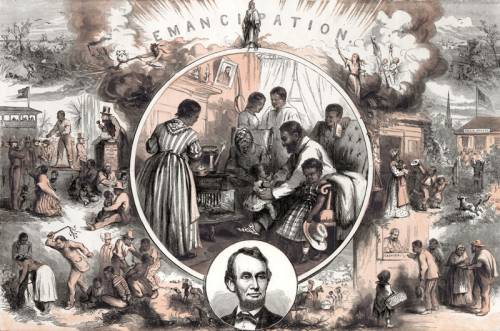
Dec. 31, 1862. The air was electric with anticipation. The long-awaited freedom yearned for was seemingly within reach for the enslaved African Americans who gathered that night, many in secret. A few months earlier on Sept. 22, President Abraham Lincoln had issued an executive order known as the “Emancipation Proclamation.” The proclamation, which would free the enslaved, would not take effect until the stroke of midnight. And so, on the last day of 1862, the enslaved gathered to watch for the calendar page to turn and, with it, their lives to change.

Frederick Douglass, an abolitionist, writer and statesman, captured the feeling of hope reverberating in the crowded small cabins where many met. “It is a day for poetry and song, a new song. These cloudless skies and this brilliant sunshine are in harmony with the glorious morning of liberty about to dawn up on us,” he wrote.

While that “morning of liberty” would not shine as brilliantly as originally hoped — the work of racial equity continues today — a new American tradition was born. Up until then, there had been variations of Watch Night services. An early reference to a Watch Night service appears in 1733 when a group of Moravians held a service of “watching and waiting” at the palace of Count Nicholas von Zinzendorf in Herrnhut, Germany. John Wesley, founder of the Methodist Church, brought a version of the service to America in the late 18th century. Among the enslaved, though, they and future generations would continue meeting on Dec. 31 for Watch Night or, as it is sometimes called, “Freedom’s Eve.” For them, it would become a night to lift prayers, sing songs and hear once again the reading of the Emancipation Proclamation.

By doing so, a tradition steeped in history is not only being kept alive among African American congregations, but a growing number of white congregations are discovering — and learning from — Watch Night services. Among them is First Presbyterian Church in Springfield, Illinois, which will be hosting its first Watch Night this year.

Welcoming a new tradition

The Rev. Susan Phillips, who came to First Presbyterian Church, Springfield, in 2017, is no stranger to getting conversations on racial justice started that can pave the way for a more inclusive community. During her 18 years serving First Presbyterian Church in Shawano, Wisconsin, Phillips was instrumental in creating a Martin Luther King Jr. Day program.

So, when Springfield’s Abraham Lincoln Association, which was founded in 1908 to promote Lincoln’s life and legacy, contacted her to host a Watch Night event, Phillips didn’t hesitate with a resounding “yes.”

“I’ve been working on dismantling systemic racism here in the community for the past three years. I knew about Watch Night traditions from having lived in Georgia. I knew of how the enslaved would gather in whatever spaces were safe to watch and wait for freedom,” she said.

Having First Presbyterian host Watch Night made perfect sense as the church has connections to the president who had issued the Emancipation Proclamation in 1862. Known as “the Lincoln church,” First Presbyterian was the place where the first family had rented a pew. It was Mary Todd Lincoln, though, who often graced the church doors, not Abe, Phillips says.

Famous parishioner aside, the hosting of a Watch Night service continues the longstanding tradition of First Presbyterian being a witness to racial justice in the community. The year the Abraham Lincoln Association was organized was also a trying time in Springfield’s history. What was to become known as the 1908 Race Riot saw Springfield’s Black community destroyed with houses and businesses burned. Two Black men were lynched, adds Phillips. It was said of the then-pastor of First Presbyterian, the Rev. Thomas D. Logan, that he “put courage into the whole city in its weakest and lowest hour.”

The Watch Night service will be a departure from the holiday tradition that Phillips’ congregation has embraced for years — an 1850s carol sing in honor of Mary Todd Lincoln’s birthday on Dec. 13, 1818. The carolers dress in period clothing. Abraham Lincoln even makes an appearance, says Phillips.

When Phillips first arrived at First Presbyterian, she wondered if the carol sing was “a show or a worship service.” She soon discovered it was more faith-filled — and truthful — of that period.

“While there weren’t explicit references to slavery, there were echoes of the struggle the country was facing in the songs and the prayers,” said Phillips.

For example, the English translation of the Christmas hymn “O Holy Night,” which is part of the carol sing, is actually rooted in the abolitionist movement. The original French text was written by the poet Placide Cappeau in 1843 and set to music by Adolphe Adam in 1847. In 1855, John Sullivan Dwight, a Unitarian minister from Boston, while translating the French text, noticed the lines in the third verse embraced his abolitionist viewpoint. He then translated that verse to read: “The Earth is free, and Heaven is open. He sees a brother where there was only a slave; love unites those that iron had chained.” Today, that line of the verse is sung: “Chains shall he break, for the slave is his brother.”

Last year, with the pandemic still raging, First Presbyterian did not hold its 1850s carol sing. “There is just something about the feel of the sanctuary bathed in candlelight that couldn’t be replicated through Zoom,” said Phillips. But that didn’t stop the conversations that the carol sing initiated: What were the dynamics taking place during the 1850s?

“This led us to doing a special production for Black History Month,” said Phillips, where historic figures such as Abraham Lincoln and Harriet Tubman dialoged with one another. Watch Night will continue these conversations.

“We have this rich history that we treasure, and not just the Lincoln connection,” said Phillips. “We have this history of having the conversation of faith and race.”

The evening, planned by members of the Abraham Lincoln Association, will include prayers, snippets of historic readings and inspirational songs. The highlight for Phillips, though, will be the reading of the 719-word Emancipation Proclamation.

Back at Shiloh Presbyterian Church in Pennsylvania, Wolf says that he is looking forward to being back in person for its Watch Night tradition. The organist is looking forward to playing songs such as “We’ll Understand It Better By and By” and “Another Year is Dawning.” He looks forward to holding that candle and sharing his hopes.

“Watch Night is a testimony to a moment from the past that can shape the future,” said Wolf. “Folks need to hear its message of freedom still to come.” And perhaps, the faithful at Shiloh, a name it adopted in 2015, which means “peace,” will be watching the night for just that: peace in the world.

Donna Frischknecht Jackson is editor of Presbyterians Today.


A Watch Night tradition

Reading the Emancipation Proclamation

Engraving of Abraham Lincoln and Watch NightThe reading of President Abraham Lincoln’s Emancipation Proclamation is often part of the Watch Night service in many congregations. Here is an excerpt from the proclamation:

That on the first day of January, in the year of our Lord one thousand eight hundred and sixty-three, all persons held as slaves within any State or designated part of a State, the people whereof shall then be in rebellion against the United States, shall be then, thenceforward, and forever free; and the Executive Government of the United States, including the military and naval authority thereof, will recognize and maintain the freedom of such persons, and will do no act or acts to repress such persons, or any of them, in any efforts they may make for their actual freedom.

That the Executive will, on the first day of January aforesaid, by proclamation, designate the States and parts of States, if any, in which the people thereof, respectively, shall then be in rebellion against the United States; and the fact that any State, or the people thereof, shall on that day be, in good faith, represented in the Congress of the United States by members chosen thereto at elections wherein a majority of the qualified voters of such State shall have participated, shall, in the absence of strong countervailing testimony, be deemed conclusive evidence that such State, and the people thereof, are not then in rebellion against the United States.

Revised Common Lectionary Readings for November 22, 2026

Revised Common Lectionary Readings (Three-Year Cycle) Lectionary Readings for Sunday, November 22, 2026 First Reading Ezekiel 34:11-16, 20-2...