Showing posts with label Paul. Show all posts

Sunday, October 25, 2020

Sunday's Message - It Does Matter – Why I’m Reformed

Here's an updated message I first offered during the celebration service in Southminster Presbyterian Church, Indianapolis, Indiana, on Reformation Sunday, 1999.

Romans 3:21-28

But now apart from law a right relationship from God has been made clear and this is bore witness by the Law and the Prophets, that a right relationship from God is through trust in Jesus Christ to all those who trust. For there is no differentiation. For all sin and fall short of God’s glory, when they are put in a right relationship without charge by his grace through the liberation of those who are in Christ Jesus, whom God put forward as a means of atonement through trust in his blood to be proof of his [desire for a] right relation through the remission of the sins that were committed beforehand [and] by the tolerance of God to prove his [desire for a] right relationship in the present time, that he desires a right relationship and puts in a right relationship the one who has trust in Jesus.

Then where is boasting? It’s excluded. Based on what law? On works? No, but through the law of trust. For we maintain that a person is put in a right relationship by trust, apart from works of the law.

It Does Matter – Why I’m Reformed

Back a ways, maybe twenty years ago, I was having lunch with a new minister to the community. And we talked about all kind of things. And of course, eventually we got to the church. And I remember we talked about the issues we faced and the concerns we had. And we shared with one another some of the things that we’d like to see happen and even some techniques and strategies we were using. Now that’s what we talked about, and let me tell you, it was very nice. But you know, after it was over, I felt a little empty. And as I was driving back here, going over our conversation, it hit me: we’d talked about all kinds of stuff and a lot of it about the church. But in that whole conversation, we never talked about theology. I mean, outside of some very broad and vague references to God and to Christ, we never really talked about what we both believed or about how our traditions could compliment one another or even why we were ministers in our particular denominations. Although we covered almost everything else, we acted as though when it comes to theology, it just doesn’t matter.
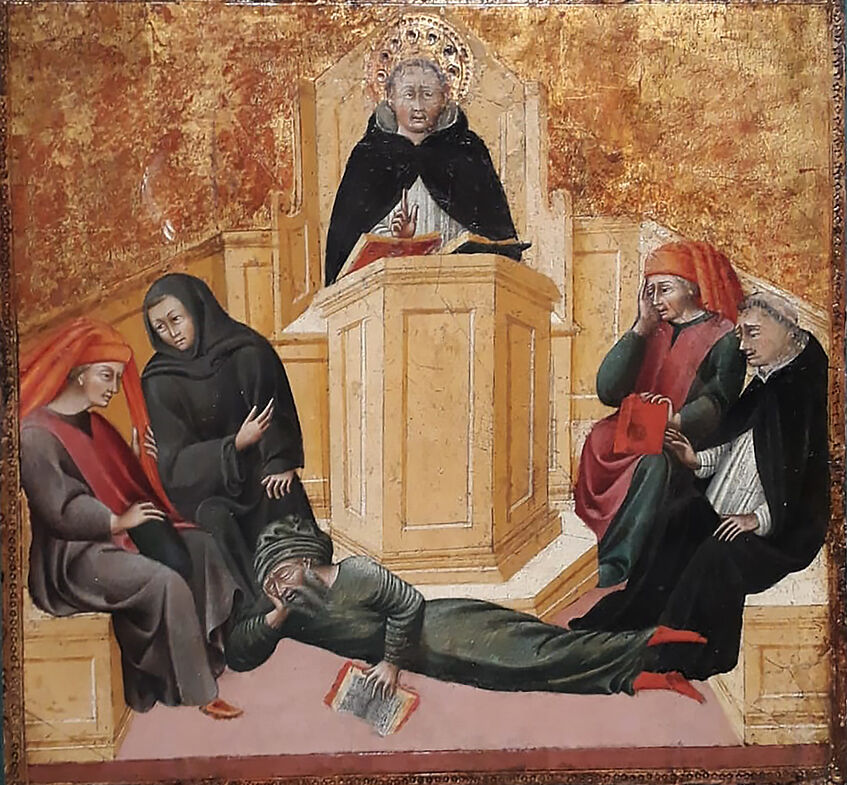
But you know, when you think about it, we were reflecting something that I believe is a reality in the modern church. I mean, let’s get real; for most American Christians, theology doesn’t matter, not really. And I think I understand why. You see, for a lot of people, if they even know what the word means, theology seem too academic, too cold, too impersonal. I had a guy tell me a little while ago that he didn’t believe in all this theological stuff. He just believed in Jesus. You see, for him there was a difference; believing in Jesus had nothing to do with theology. Now that’s one. And I’ll tell you, I also think a lot of people see subjects other than theology as, well, more important to the church. I mean, good gracious, when you think about a church, things like how they worship or what kind of activities they offer and of course whether you enjoy being there, those things are often far more important than the beliefs that may lie behind the worship and activities and the positive feelings. And so you see, for a lot of people, theology really doesn’t matter all that much.

And as a result, like it or not, theology gets pushed aside, even when it comes to our relationship with God. What stands as the foundation gets shoved to the back burner, and we end up focusing on the surface, relying far more on things like words and cliches and personal feelings than on anything offered in Scripture. And as a result often we end up buying into to ideas that are comfortable and popular, and I’m talking about a relationship with God that has all kinds of benefits at almost no cost, a faith that has both the flavor and nutritional value of candy corn. But not only that, we can also be drawn religious systems that sure sounds Christian, my goodness, that use all the right words and cliches, that draw all kinds of people, but which lead some very un-Christian feelings: like pride and self-righteous when we feel spiritual and guilt and fear when we don’t.

Now, I think that’s what’s happening in the modern church, maybe to some of us right here. Therefore, on this Reformation Sunday, we’re going to talk about theology, about how we can see God and Jesus Christ, because I’ll be right up front with you, I think it does matter. And in particular, we going to look at a kind of theology that’s grounded in the letters of Paul and written about by great preachers and reformers like Martin Luther and John Calvin and Karl Barth, a way to view God that’s not only profoundly Biblical but which can change your life, because I’ll tell you, it changed mine. And for that reason, during the rest of the sermon, I’m going talk about what’s called reformed theology, and I’m going to do it in a way that’s a little different, at least for me. You see, I’m going to share a little bit of my life as a Christian. In other words, I’m going to give you my personal testimony.

Because, I’ll tell you, when it comes to how I see the basis for my relationship with God and understand the work of Jesus Christ, in other words, when it comes to theology, I am not ashamed to admit that it does matter to me, and that’s why I’m reformed and that’s why I’m a minister in the Presbyterian Church (U.S.A.). It does matter. 

But you know, that’s not what I would have said forty years ago. Although I was raised in the southern part of this denomination, when I was about 15, my father had a religious experience, pulled us out of public school and Ocean View Presbyterian and put my brother, sister and I in Norfolk Christian and the Tabernacle Church. Now, I recognize that his motives were good and I’m not going to criticize either the school or the church. Unfortunately, though, while there, something not so great happened to me, not to my brother or sister, just to me. I was drawn into to a kind of Christianity that looked and sounded wonderful on the surface, and that had all kinds of appeal to a teenager who wanted some solid structure to hold on to and some very clear rules to follow, but which had, at it’s core, some ideas that really damaged and distorted by life. You see, once you cut through the words and the cliches, I was taught to believe that my relationship with God was grounded on what I had done. It was based on the decisions that I made and the words that I used and feelings that I experienced. And although I’d have said in a heart-beat, that God was in charge and grace was a gift and faith was different from work, I always tacked on a “but,” to remind me and whoever I was talking to that faith meant doing and saying and feeling certain things, and that grace really wasn’t a gift, and that when you get right down to it, God really wasn’t it charge, certainly not of salvation. Those things were in my hands, under my control, to get or to lose based on my actions. Now that’s what I believed sincerely, honestly, passionately. And although I kept a grin on my face, (I mean, Christians are suppose to be happy all the time, right?) I was miserable. My gosh, it was like I had a dual personality. When I was doing what I was supposed to do, I was proud and I was self-righteous and I was incredibly judgmental. And why not, I was going to heaven, and you probably weren’t. But those periods of righteous arrogance were few and far between, because most of the time I was unbelievably guilty and scared. I mean, give me a break, you tell a teenage boy, with raging hormones, that you had to get saved and that God always knew what you were thinking... and if you didn’t measure up, he’d drop you into Hell in a heartbeat, not exactly a formula for peace and tranquility. But that’s what I believed.

And I believed it passionately until something truly remarkable happened, something that literally changed my life. And it all started because of Christmas carols. For reasons I never understood, the Tabernacle Church didn’t sing that kind of stuff, I guess they weren’t spiritual enough, but I’ll tell you, that was something I really missed from my childhood. And so, in December of 1979, I went back to Ocean View Presbyterian Church, with two goals in mind. First, I was going to sing “Silent Night” and “Hark, the Herald Angels Sing” and “Joy to the World” for the first time in years. And second, while I was there, I would convert the Presbyterians, starting with the minister. You see, and this is interesting, although Christianity made me feel rotten most of the time, I still felt the need to share it with others. I guess misery really does love company. And so I started working on the minister. We’d meet for lunch and I asked him all those tricky questions designed to make a person feel uncomfortable and I used all the individual verses, taken hopelessly out of context, to get him to admit he was wrong. That’s what I used to do, and looking back, I was a real jerk. 

But in spite of that, for some reason, he took an interest in me. Maybe he could see that under the Christian grin, I was very unhappy. Anyway, between my speeches, he’d share with me something he called reformed theology. In fact, he told the same kind of things Paul wrote to the Romans in the passage we read: “But now apart from law a right relationship from God has been made clear and this is bore witness by the Law and the Prophets, that a right relationship from God is through trust in Jesus Christ to all those who trust.” In other words he explained to me who we really are, that there is “no differentiation. For all sin and fall short of God’s glory.” And he also told me about what God had done, how we “are put in a right relationship without charge by his grace through the liberation of those who are in Christ Jesus, whom God put forward as a means of atonement through trust in his blood to be proof of his [desire for a] right relation through the remission of the sins that were committed beforehand [and] by the tolerance of God to prove his [desire for a] right relationship in the present time, that he desires a right relationship and puts in a right relationship the one who has trust in Jesus.” And he told me what that meant, as Paul wrote: “Then where is boasting? It’s excluded. Based on what law? On works? No, but through the law of trust. For we maintain that a person is put in a right relationship by trust, apart from works of the law.” In other words, Jim Carriker shared with me good news, that God is in charge. And that our relationship with him is grounded on his grace. And that faith wasn’t a lot of stuff to do or say or even believe. No, it was simply trust: trust in what God had done through Christ, trust in response to the relationship God had already established with me, and trust that regardless of what I do or say, God wouldn’t let me go. 

You see, that minister shared with me theology, and like I said, it changed my life, because maybe for the first time I was free: man, I was free for the first time in my Christian life from that cycle of pride and guilt, because when it comes to my relationship with God, I have no reason to boast or to be afraid. And I was free to accept myself and others as we really are, warts included, as sinners saved by grace, as believers who are trying to say “thank you” to the God who’s done so much for us, and as non-believers who are loved by that same God, they just don’t know it yet. Not only did I no longer have to judge the spirituality of my neighbor, I didn’t have to smile all the time to look like a Christian. And in a real way, this gave me the freedom to do what God had called and equipped me to do. You see, if Jim hadn’t shared with me reformed theology, there’s no way I’d be a minister today.

And so you see, that’s my story, my testimony. And although I know that for a lot of Christians, theology doesn’t matter and that other issues have become more important than how they understand their relationship with God and that like me, too many sincere and dedicated people are drawn into religious systems that lead to pride and guilt, that’s not the case with me any more, and I sincerely hope it’s not the case with you either. Because, I’ll tell you, I’m a different person because of reformed theology. I mean, my life changed when I realized that my relationship with God was grounded on what God has already done rather than on what I was expected to do. And that’s not only why I’m reformed, but why I can say with conviction and passion, that brothers and sisters, it does matter.


Sunday, September 6, 2020

Sunday's Sermon - Spiritual Growth for Short People: Sharing the Message


During the winter of 2017, I preached a series of sermons entitled "Spiritual Growth for Short People."
As it relates to spiritual growth, have you ever felt “height challenged”? If you’ve ever felt somewhat short in the spirituality department, this sermon series is for you. For six Sundays, we discussed how we might grow in our faith and in our relationship with God. Specifically, we cover the following growth-related topics: ✙ Recognizing Our Limits ✙ Trusting the Lord ✙ Loving One Another ✙ Making an Impact ✙ Sharing the Message ✙ Bringing in the Harvest Below is a copy of the message in this series sermon, "Spiritual Growth for Short People: Sharing the Message,” and we’ll consider the fifth step if we want to grow in our relationship and our understanding of God.." During the message, we'll focus on Romans 10:14-17:

But how are they to call on one in whom they have not believed? And how are they to believe in one of whom they have never heard? And how are they to hear without someone to proclaim him? And how are they to proclaim him unless they are sent? As it is written, “How beautiful are the feet of those who bring good news!” But not all have obeyed the good news; for Isaiah says, “Lord, who has believed our message?” So faith comes from what is heard, and what is heard comes through the word of Christ.

Well, here we are, in week five of this series dealing with spiritual growth. Which means that over the last four weeks, we’ve looked at four things that we can do in order to grow on the inside, you know, in our relationship with God. And during this time, these are the things we’ve talked about. During the first sermon, we considered how, when we recognize our limits, we're more realistic in what we expect and more focused in how we approach God and more patient in our faith. And then, during the second sermon, we looked at how trusting the Lord helps us grow, because that’s really what faith is, you know, trust, and it begins with a decision on our part, and when we decide to trust God, we’re now free to explore different ways we might grow. And in week three, we talked about loving one another, something that makes us to turn from the values of the world and that moves us behind Jesus Christ and that leads us to change our attitudes and our actions. And then last week, we looked at why a desire to make an impact is so important to spiritual growth, you know, how it forces us to listen to others and to look within ourselves and to come closer to God. Now this is what we covered during the last four weeks.

And this morning, we’re going to take what I think you could call the fifth step to genuine growth, and now I’m talking about how sharing the message of Jesus Christ not only helps others but is also something like spiritual Mircle-Gro. And to put this in a Biblical context, just listen to this passage from Paul’s letter to the Romans. He wrote, “But how are they to call on one in whom they have not believed? And how are they to believe in one of whom they have never heard? And how are they to hear without someone to proclaim him? And how are they to proclaim him unless they are sent? As it is written, ‘How beautiful are the feet of those who bring good news!” But not all have obeyed the good news; for Isaiah says, ‘Lord, who has believed our message?’ So faith comes from what is heard, and what is heard comes through the word of Christ.

Of course, I don’t think there’s anything in these verses that we don’t already know. I remember, years ago when I was a young Christian, attending a church that really emphasized evangelism, man, I had this drilled into my head all the time. And even though, looking back, there was a whole lot more guilt than grace in my faith back then, I was still pushed to share it with others. I guess I was suppose to make others as guilty and as miserable as I was. But be-that-as-it-may, we were constantly told to go and make disciples of all nations and that could only be done by approaching folks and telling them why they needed to accept Jesus as their personal Lord and savior. That’s what we were told God wanted. That’s what we heard given in testimonies. And that’s what I think, down deep, we all really wanted to do. There was just one problem, most of us didn’t do it. And I’ll tell you, if those who claimed that they witnessed all the time, you know, if they were kind of massaging the truth, well, I think we can broaden that number. Man, even though we knew it was important, we just didn’t do it.


And the reason, well, I don’t think it was all the different from why most Christians, and right now I’m talking about us, you know, why we don’t share the message of Jesus Christ to others. And like it was for me back then, it’s not because we’re bad people. And it’s not because we don’t care about others. And it’s not because we don’t believe it God. Those aren’t the reasons we’re not out there sharing the message. Instead I think it really comes down to fear. You see, I think most people are simply afraid. And if I’m honest as I look in the mirror, I include myself too. I mean, think about it, we’re afraid that we don’t know enough about the Bible, right? My goodness, if I’m out there, talking to folks about God and Jesus and stuff like that, what’s going to happen if they ask a question I can’t answer? Or what if I don’t know a Bible verse to throw at them at just the right time? And what if I find out that they may know more about this religious stuff than me? What happens then? Now that’s one valid fear we might have.

And so is a fear of approaching people, especially strangers, with a message that they might want to hear. Now, I know there are some really gifted salesmen and women who can sell air conditioners to Eskimoes or gutters to people who don’t own houses, there are people like that, but let’s face it, that’s not most of us. I mean, even though we can talk on and on about Big Ben, most of us feel a lot less comfortable talking about God, and why it’s important to have faith in him, and how he’s made a difference in our own lives. I’ll tell you, just thinking about doing something like that to a person standing in front of me in the check out line over at Walmart, I’ll tell you, that makes me a little uneasy inside, and I’m a minister. I mean, it’s pretty scary going up to someone and to start talking about Jesus.

Just like it’s scary to think about failing. Good night nurse, it’s one thing to disappoint a parent or a teacher or a boss; it’s something entirely different disappointing the Lord and Creator of the Universe, the one who holds our eternal destiny in his hands, the entity who will determine where we spent eternity. My gosh, a parent may ground me. A teacher may fail me. And a boss may fire me. But when I’m grounded and failed and fired by God, man, he uses real fire. How could a person who really appreciates the power of God not feel some fear at letting him down.

And so, with all this fear bubbling up within us, it actually seems more likely than not that we’re going to stay silent when we could speak up and hide behind thick walls and stained glass when we could reach out into our world and our community. And even though that decision will certainly hurt others, because sadly right now there are people in our families and in our neighborhoods and in our community who may never hear about the unconditional love and the irresistible grace and the unmerited mercy of God if we don’t share it with them, although we are going to hurt them when we’re silent, I’m telling you, we’re also going to hurt ourselves, and I’m talking spiritually. You see, all this fear and confusion and doubt is going to distract us from God’s word, a word that tells us to get up and share. And it’s going to separate us from the world around us, deluding us into believing that our faith can be private and our church can cater to members first and maybe only. But worst of all, as we allow fear to cause us to pull back and to quiet down and to hide within, I’m telling you, that’s going to prevent us from ever spiritually growing into the men and women God created us to be.

And for that reason, I think it’s absolutely crucial for us to deal with the fear that prevents us from being what God has given us the opportunity to become. And you know, I think we can do that, we can deal with that fear, and as a result, we can grow by making three pretty important decisions, and here they are. You see, first, because we’re so often afraid to share because we don’t know enough, we can make the decision to study the Bible. I mean, duh. Now that’s pretty obvious, at least to me; if I want to understand what the Bible says, it seems like a good idea to find a Bible and to start reading it. Of course, if I’m really serious about understanding it, I also might decide to start attending a study like the one we have every Tuesday evening, where a group gets together to discuss what the scriptures say and to do it under the leadership of someone who’s intentionally studied God’s word for years. I’m sorry, but believers aren’t magically filled with all biblical knowledge when they say that they believe. The Holy Spirit opens their minds so that they might learn, but to do that, the person still needs to open the book. But I’ll tell you, understanding is still more than memorizing verses or learning what the Bible says. It also involves being able to apply something that was written two thousand years ago to a world that either Paul nor the disciples could have envisioned. Studying the Bible means taking the old, old story and intentionally eliminating the restrains people impose so that it can speak with power and relevance in a constantly changing world. I’m telling you, we can study the word. And when we do, not only will our understanding improve, so will our confidence. We’ll no longer be limited, because we’re afraid that we don’t know. We’ll either be knowledgeable enough be offer real answers to real questions or confident enough to say, “I don’t know” when faced with something that’s beyond us. You see, when we decide to study the Bible, both our understanding of the message and our confidence grows. And that’s the first thing we can do when fear prevents us from sharing.

And second, when we’re afraid about approaching others with the message, we can decide that there are actually a whole bunch of different ways that it might be done. In other words, we can do a little strategizing. We can consider some techniques that might help us be as effective as we can be. Of course, part of developing a strategy and applying techniques involves knowing about the folks who are receiving the message. I mean, at the very least, I need to know a little about their background, their values, their perspectives. Put another way, sharing the gospel isn’t one size fits all. For example, I remember reading, years ago, about a minister who was trying to share the message with some troubled kids in the inner city, and he was getting no where talking about how God was like a good shepherd, because these kids had no idea what a shepherd was much less what a good one did. But when he made a little shift and taught that the Lord was like a really good probation officer, maybe the only person who really cared whether they lived or died and who was there to help them succeed, all of a sudden those young people started to understand the nature and love of God. To share, we better know our audience. Just like we better know ourselves. I mean, if I get flustered speaking in front of groups, maybe I shouldn’t be a preacher, but if I’m uneasy sharing one-on-one, maybe I need to work along side someone else. And I might have a real passion for writing letters or making phone calls or posting online. You see, along with knowing about others, and I haven’t even talked about sharing Christ through actions rather than words, I also need to know about myself, if I’m serious about sharing. And when I do, then I’ve got to believe my comfort level is going to increase. In other words, when we decide to do this, not only will our understand of others and of ourselves grow, so will our comfort in sharing God’s word. And that’s the second thing we can do when we’re afraid.

And finally, we can decide to trust God. Now I know we talking about that a lot in the second sermon and a little bit last week, but I also think it applies right here, and I’ll tell you why. For a lot of Christians, the fear of rejection, the fear of ridicule, the fear of failure prevents them from doing something as simple as inviting someone to come with them to church. My gosh, if I were to do that and they turned me down, it would be awful, right? Well, not if we’ve already decided to believe that God loved us before he formed the universe and will love us after time has lost it’s meaning. And not if we’ve already decided to have faith that Jesus died and was raised for us, for you and for me, two thousand years before we born, which means he did it without our permission or our help. And not if we trust that the Holy Spirit is with us right now and always, flowing around us and filling us, opening our minds so that we can understand and our hearts so that we can feel and our hands so that we can serve. You see, the more we decide to trust in God, the more peace we’re going to experience. You see, when we decide to trust so that we can share, both our understanding of God and our sense of peace will grow.

You know, I don’t think it matters how much it’s drilled into our heads. Down deep we all know that we’re called to share the message of Jesus with others. But we also know that fear, fear of not knowing enough, fear of approaching people, fear of failure, we also know that fear can keep us still and silent. And even though that certainly impacts those who may never have the chance to hear, we also hurt ourselves. But if we decide to study God’s word and to think about different ways we might approach others and to trust God, I think we can get past the fear. And when we do, not only will our understanding of the Bible and our understanding others and ourselves and our understand of God, not only will all that grow, so will our confidence and our comfort and our peace.

Sunday, August 9, 2020

Cove's Celebration Service - Sunday, August 20, 2017

Below is the service I led at Cove Presbyterian Church on August 20, 2017. During the summer of 2017, I preached a series of sermons entitled "Living by the Spirit." Although God has called us and filled us with the Spirit, often our lives don’t actually reflect his presence. Of course, that doesn’t stop us from talking about it and claiming to understand how to get it and even judging whether or not others have got it. This we do often and well. What we’re not so good at doing is living it, in other words, living by the Holy Spirit. And that’s what we’re going to talk about this summer, how we might demonstrate the presence of God through our lives. Using Galatians 5:22-26, we’ll consider the following topics:
✙ Those who live by the Spirit...
✙ Those who live by the Spirit demonstrate love.
✙ Those who live by the Spirit feel joy.
✙ Those who live by the Spirit work for peace.
✙ Those who live by the Spirit have patience.
✙ Those who live by the Spirit show kindness.
✙ Those who live by the Spirit practice generosity.
✙ Those who live by the Spirit understand faithfulness.
✙ Those who live by the Spirit exhibit gentleness.
✙ Those who live by the Spirit have self-control.

As with all our services, worship is intended to be a free expression of our love for God and the joy we feel when we accept that love. Of course, there are many ways for us to express that love and joy. So that we can experience a greater sense of freedom and flexibility in our praise, the session decided to move away from a rigid order of worship, with the different elements printed in a very formal way, and to utilize the screen and the worship leader to guide us through the service. Below you’ll find some material that you may need to participate fully in our praise and reverence for God.

We started the service with the announcements. As the Bible entered, we sang "This is the Day that the Lord Has Made.”

Instrumental and vocal music are important to our worship. Songs give us the chance to praise God and to help focus our attention on the theme of the service. During the service, we have the opportunity to sing songs that reflect different musical styles. Since God has called into his church as individuals with a variety of tastes, this offers us the chance to display our sensitivity for our fellow worshipers and to grow in our knowledge of how we might praise God. Our first song was “Give of Your Best to the Master.”

Our prayers represent our communication with God. Of course, as Paul wrote, the Holy Spirit “...intercedes for us with groans too deep for words”; therefore, God already knows our needs. Still it’s important that we put them into words, as well as the regret we feel for our sins and our thanks for all God has done for us.

During the Our Congregational Prayer, we confessed our sins and hear the assurance that we're forgiven.  We also lifted our concerns and needs to God.  We closed this prayer with The Lord’s Prayer. As we collected the offering, Enid and Janice played “Faith Of Our Fathers.” 

God’s word is at the core of the worship service. It’s often reflected in the songs we sing and the prayers we pray. But it’s most clearly present when we read a passage from the Bible, and it’s applied to our daily living in the sermon.

This morning, the messages in this series, Living by the Spirit, are based on Galatians 5:16-26:

Live by the Spirit, I say, and do not gratify the desires of the flesh. For what the flesh desires is opposed to the Spirit, and what the Spirit desires is opposed to the flesh; for these are opposed to each other, to prevent you from doing what you want. But if you are led by the Spirit, you are not subject to the law. Now the works of the flesh are obvious: fornication, impurity, licentiousness, idolatry, sorcery, enmities, strife, jealousy, anger, quarrels, dissensions, factions, envy, drunkenness, carousing, and things like these. I am warning you, as I warned you before: those who do such things will not inherit the kingdom of God. By contrast, the fruit of the Spirit is love, joy, peace, patience, kindness, generosity, faithfulness, gentleness, and self-control. There is no law against such things. And those who belong to Christ Jesus have crucified the flesh with its passions and desires. If we live by the Spirit, let us also be guided by the Spirit. Let us not become conceited, competing against one another, envying one another.
The focus of the message was on self-control and the title of the sermon was “When the Brownie Knows Our Names.”


Our service ended with the congregation singing "Spirit Song."


Below is the podcast of the service.


Sunday's Sermon - When the Brownie Knows Our Names


During the summer of 2017, I preached a series of sermons entitled "Living by the Spirit." Although God has called us and filled us with the Spirit, often our lives don’t actually reflect his presence. Of course, that doesn’t stop us from talking about it and claiming to understand how to get it and even judging whether or not others have got it. This we do often and well. What we’re not so good at doing is living it, in other words, living by the Holy Spirit. And that’s what we’re going to talk about this summer, how we might demonstrate the presence of God through our lives. Using Galatians 5:22-26, we’ll consider the following topics:
Those who live by the Spirit...
Those who live by the Spirit demonstrate love.
Those who live by the Spirit feel joy.
Those who live by the Spirit work for peace.
Those who live by the Spirit have patience.
Those who live by the Spirit show kindness.
Those who live by the Spirit practice generosity.
Those who live by the Spirit understand faithfulness.
Those who live by the Spirit exhibit gentleness.
Those who live by the Spirit have self-control.

Below is a copy of the last message in this series sermon, "Those who live by the Spirit have self-control."


Well, this is it. And even though I feel like singing “The Way We Were,” I won’t do it. And I say that in spite of the fact that right now, “Memories light the corners of my mind, misty water-colored memories of the way we were.” You see, today we end a journey we started way back on June 11, you know, when the world was a simpler place, back when few people outside of the ACC knew much about Charlottesville and few comic book fans associated Wonder Woman with World War One and we all assumed nothing else could go wrong with the air conditioning: good times, good times. But that was then and this is now, and this morning we’re putting a bow on our series dealing with living by the Holy Spirit.

And what a series it’s been. Over the last nine weeks, we’ve looked at what living by the Spirit isn’t. And then we’ve discussed love and joy, peace and patience, kindness and generosity, faithfulness and gentleness. And this morning, well, we’re looking at the one fruit that might actually be the most challenging of all, and right now I’m talking about self-discipline. You see, this is the one trait that all Christians are supposed to have, but that may also be the toughest to show on anything like a consistent basis, at least it is for me. Man, it’s hard to be self-disciplined.

But of course, it’s even harder when the stuff we find most tempting seems to know our name. Let me give you an example. As most of y’all know, on Tuesday, we had a bereavement dinner after the service remembering Paul Welch. And to that dinner, one of the ladies brought these little brownies with a pecan or maybe a walnut on the top. Now, I’ve got to tell you, along with snick-a-doodles and pizzelles and gingerbread, I love brownies. In fact, whenever I see a brownie, not only do I begin to feel a deep hunger inside, but it brings back some of the very best memories of childhood. Anyway, for the dinner someone brought these wonderful brownies, and I know they were wonderful, because I ate one.

And that would have been fine, but for some reason, after everything had been cleaned up and put away, there was one brownie left that the ladies put in the refrigerator, I guess so the deacons could put it out today in the parlor. And so there it was, sitting on the second shelf. And as the week went by, I discovered something strange happening. You see, this wasn’t just any brownie. In fact, I think you could call it mystical, because not only had it somehow developed the power of speech, it knew my name. You see, on Wednesday and Thursday, every time I got a cup of coffee I could hear the brownie speaking to me. And it would say stuff like, “Ed, aren’t you hungry for me” and “Wouldn’t I taste great with that cup of coffee” and “Don’t worry, I don’t have any calories,” you know, stuff like that. Well that’s what happen on Wednesday and Thursday. And on Friday, I could hear the brownie speaking all the way in my office. And then on Saturday, not only could I hear it, somehow it had gotten into my subconscious and I was being drawn, of course against my will, to that little chocolate square on the styrofoam plate. I’ll tell you, just like the sirens drew sailors to the rocks, that brownie was drawing me to the refrigerator. And you know, by yesterday evening, about seven o’clock, both the brownie and its song was so sweet, my resolve, my strength, my inner desire to be disciplined, man, that was melting away. Now that’s what happened to me. But don’t sit there all snug. I think few people could resist a brownie that knows their name.

But of course, if we’re honest with ourselves, self-discipline or the lack thereof isn’t just about food. There’s all kinds of stuff that we allow to draw us away from what we know is right and best and even Christian. And I think our only hope of not drifting away is what Paul considered the ninth fruit of the Holy Spirit. And since, right along with love and kindness and faith, he considered it something all Christians must show, we’re going to talk about self-discipline this morning, specifically what self-discipline is and how self-discipline can be developed and finally, why self-discipline is so important. And like we’ve done nine times before, we’re going to use the Bible to do it. Now that’s what we’re going to focus on during the rest of our time together.

And I’ll tell you, when you’re considering what self-discipline is, I think you have to also spend a little time looking at what it isn’t. And you know, when you’re talking about what self-disciple is all about, I think you really have to go to the Greek word that Paul used in Galatians: ἐγκράτεια. You see, that word literally means “having dominion over self.” And even though all the words Paul used in his list of fruits were offered in Greek because it was in this language that he wrote the letter, with this particular word, the Greek is really important, and I’ll tell you why. “Having dominion over self” or having self-discipline,” well it was considered a virtue by the Greeks, not the Jews. In the whole Greek translation of the Old Testament, this particular word is almost never used, because Jews emphasized obeying God, not disciplining self.

But that wasn’t the case for the Greeks. Self-discipline was considered necessary to live a virtuous life. That’s what they thought. And evidentially, so did Paul. And for him, self-discipline demanded self-control. In other words, a disciplined person was able to control some of his inner drives and impulses. And I think this is something we can see when he talked to the Corinthians about marriage and specifically about why a Christian might need to get married and when he wrote about how living the Christian life was actually like a foot race. For example, this is what he wrote about marriage: “The husband should give to his wife her conjugal rights, and likewise the wife to her husband. For the wife does not have authority over her own body, but the husband does; likewise the husband does not have authority over his own body, but the wife does. Do not deprive one another except perhaps by agreement for a set time, to devote yourselves to prayer, and then come together again, so that Satan may not tempt you because of your lack of self-control. This I say by way of concession, not of command. I wish that all were as I myself am. But each has a particular gift from God, one having one kind and another a different kind. To the unmarried and the widows I say that it is well for them to remain unmarried as I am. But if they are not practicing self-control, they should marry. For it is better to marry than to be aflame with passion.” [1 Corinthians 7:3-9] You see, for Paul, self-control involved harnessing the natural feelings that people have for one another. And later in the same letter, he wrote, “Do you not know that in a race the runners all compete, but only one receives the prize? Run in such a way that you may win it. Athletes exercise self-control in all things; they do it to receive a perishable wreath, but we an imperishable one. So I do not run aimlessly, nor do I box as though beating the air; but I punish my body and enslave it, so that after proclaiming to others I myself should not be disqualified.” [1 Corinthians 9:24-27] In other words, being a successful Christian is just like being a successful athlete. They both take dedication and effort and even sacrifice, but not just for the sake of sacrifice. Rather what is done is done for the sake of winning the race. Therefore, on one hand self-discipline is all about self-control.

On the other hand though, it has nothing to do with what we consider self-indulgence. And I think Paul defined what he had in mind with this kind of life-style when he wrote to the Philippians, “For many live as enemies of the cross of Christ; I have often told you of them, and now I tell you even with tears. Their end is destruction; their god is the belly; and their glory is in their shame; their minds are set on earthly things. But our citizenship is in heaven, and it is from there that we are expecting a Savior, the Lord Jesus Christ.” [Philippians 3:18-20] And remember, for Paul, the opposite of living by the Spirit was satisfying the desires of the flesh. He wrote, “Now the works of the flesh are obvious: fornication, impurity, licentiousness, idolatry, sorcery, enmities, strife, jealousy, anger, quarrels, dissensions, factions, envy, drunkenness, carousing, and things like these.” [Galatians 5:19-21] Now maybe it’s just me, but this seems to be a pretty self-indulgent, self-centered, self-satisfying way to live. You see, it would seem that Paul believed Christians should be self-controlled and not self-indulgent. And that’s what self-discipline is all about.

And how does self-discipline develop? For Paul there seems to be two things Christians need to do. First, to develop self-discipline, we really need to trust God. I mean, I think that’s why he called it a fruit of the Spirit, in other words, something the Holy Spirit works within us. But beyond that, I think it’s important that self-discipline appeared last in Paul’s list. You see, by occupying this final position, self-discipline assumes a place of strategic importance. In fact, you might say that self-discipline is the summation of the previous eight qualities that the Spirit produces. In other words, the work of the Spirit reaches its consummation in self-control. And this virtue enables us to realize every other aspect of spiritual fruit. And so, our ability to control ourselves starts as a gift from God. But second, it’s a gift that needs to be claimed and used in order to do us any good. I mean, it’s like getting a membership to the community center for your birthday, you know so you can get in better shape. That membership ain’t worth a hill of beans if you never go. You see, although God may give us the ability to become “athletic” Christians, we’re still going to have to decide to do the training ourselves. And this is something Paul knew. For example, just listen to what he wrote to Timothy: “If you put these instructions before the brothers and sisters, you will be a good servant of Christ Jesus, nourished on the words of the faith and of the sound teaching that you have followed. Have nothing to do with profane myths and old wives’ tales. Train yourself in godliness, for, while physical training is of some value, godliness is valuable in every way, holding promise for both the present life and the life to come. The saying is sure and worthy of full acceptance. For to this end we toil and struggle, because we have our hope set on the living God, who is the Savior of all people, especially of those who believe.” [1 Timothy 4:6-10] Of course, training ourselves in godliness is probably going to involve doing things like attending worship and studying the Bible and avoiding criticizing others and assuming that we already know everything worth knowing. You see, we need to trust God and use the tools and opportunities he’s given us; that’s how self-discipline develops.

And why is it important, well, I think that comes down to two benefits. I mean, first, it strengthens our faith, and I’m talking about our faith in God. In other words, the more we focus on getting some control over ourselves and the more we trust God and use what he’s given, the closer we’ll come to him. And you know, I think we can see this link between faith and self-discipline in Peter’s second letter: “For this very reason, you must make every effort to support your faith with goodness, and goodness with knowledge, and knowledge with self-control, and self-control with endurance, and endurance with godliness, and godliness with mutual affection, and mutual affection with love. For if these things are yours and are increasing among you, they keep you from being ineffective and unfruitful in the knowledge of our Lord Jesus Christ.” [2 Peter 1:5-8]. You see, self-discipline strengthens our faith in God. But that’s not the only reason it’s important. Second, people who have control over some of their less than beneficial impulses really help others, particularly other believers. Paul wrote this to Titus: “For a [church leader], as God’s steward, must be blameless; he must not be arrogant or quick-tempered or addicted to wine or violent or greedy for gain; but he must be hospitable, a lover of goodness, prudent, upright, devout, and self-controlled. He must have a firm grasp of the word that is trustworthy in accordance with the teaching, so that he may be able both to preach with sound doctrine and to refute those who contradict it.” [Titus 1:7-9] I’ll tell you, in the church, a leader who can’t discipline him or herself isn’t much of a leader, at lest not for Paul. You see, self-disciplined Christians help both themselves and others, and that’s why it’s important.

Now, I have a question for one of the deacons who set-up the snacks in the parlor this morning. Did you move any brownies upstairs? You see, I already know you didn’t. I just couldn’t resist anymore and so I gave into to the dark chocolate side. I failed in my attempt to be self-disciplined. But as it comes to our spiritual lives, we can be a little better than that. I mean, we can choose self-control over self-indulgence. And we can trust God and use what’s he’s given us. And when we do, we’ll help both ourselves and others. And I’ll tell you, we can do it, even though the brownie may actually know our names.


Saturday, August 1, 2020

Cove's Celebration Service - Sunday, August 13, 2017

Below is the service I led at Cove Presbyterian Church on August 13, 2017. During the summer of 2017, I preached a series of sermons entitled "Living by the Spirit." Although God has called us and filled us with the Spirit, often our lives don’t actually reflect his presence. Of course, that doesn’t stop us from talking about it and claiming to understand how to get it and even judging whether or not others have got it. This we do often and well. What we’re not so good at doing is living it, in other words, living by the Holy Spirit. And that’s what we’re going to talk about this summer, how we might demonstrate the presence of God through our lives. Using Galatians 5:22-26, we’ll consider the following topics:
✙ Those who live by the Spirit...
✙ Those who live by the Spirit demonstrate love.
✙ Those who live by the Spirit feel joy.
✙ Those who live by the Spirit work for peace.
✙ Those who live by the Spirit have patience.
✙ Those who live by the Spirit show kindness.
✙ Those who live by the Spirit practice generosity.
✙ Those who live by the Spirit understand faithfulness.
✙ Those who live by the Spirit exhibit gentleness.
✙ Those who live by the Spirit have self-control.

As with all our services, worship is intended to be a free expression of our love for God and the joy we feel when we accept that love. Of course, there are many ways for us to express that love and joy. So that we can experience a greater sense of freedom and flexibility in our praise, the session decided to move away from a rigid order of worship, with the different elements printed in a very formal way, and to utilize the screen and the worship leader to guide us through the service. Below you’ll find some material that you may need to participate fully in our praise and reverence for God.

We started the service with the announcements. As the Bible entered, we sang "This is the Day that the Lord Has Made.”

Instrumental and vocal music are important to our worship. Songs give us the chance to praise God and to help focus our attention on the theme of the service. During the service, we have the opportunity to sing songs that reflect different musical styles. Since God has called into his church as individuals with a variety of tastes, this offers us the chance to display our sensitivity for our fellow worshipers and to grow in our knowledge of how we might praise God. Our first song was “Peace, Perfect Peace.”

Our prayers represent our communication with God. Of course, as Paul wrote, the Holy Spirit “...intercedes for us with groans too deep for words”; therefore, God already knows our needs. Still it’s important that we put them into words, as well as the regret we feel for our sins and our thanks for all God has done for us.

During the Our Congregational Prayer, we confessed our sins and hear the assurance that we're forgiven.  We also lifted our concerns and needs to God.  We closed this prayer with The Lord’s Prayer. As we collected the offering, Katie Parker, Kelly Morris, Laura Mohawk played a flute trio. 

God’s word is at the core of the worship service. It’s often reflected in the songs we sing and the prayers we pray. But it’s most clearly present when we read a passage from the Bible, and it’s applied to our daily living in the sermon.

This morning, the messages in this series, Living by the Spirit, are based on Galatians 5:16-26:

Live by the Spirit, I say, and do not gratify the desires of the flesh. For what the flesh desires is opposed to the Spirit, and what the Spirit desires is opposed to the flesh; for these are opposed to each other, to prevent you from doing what you want. But if you are led by the Spirit, you are not subject to the law. Now the works of the flesh are obvious: fornication, impurity, licentiousness, idolatry, sorcery, enmities, strife, jealousy, anger, quarrels, dissensions, factions, envy, drunkenness, carousing, and things like these. I am warning you, as I warned you before: those who do such things will not inherit the kingdom of God. By contrast, the fruit of the Spirit is love, joy, peace, patience, kindness, generosity, faithfulness, gentleness, and self-control. There is no law against such things. And those who belong to Christ Jesus have crucified the flesh with its passions and desires. If we live by the Spirit, let us also be guided by the Spirit. Let us not become conceited, competing against one another, envying one another.
The focus of the message was on gentleness and the title of the sermon was “Earth or Dirt.”


Our service ended with the congregation singing "Meekness And Majesty."


Below is the podcast of the service.


Sunday, July 26, 2020

Cove's Celebration Service - Sunday, August 6, 2017

Below is the service I led at Cove Presbyterian Church on August 6, 2017. During the summer of 2017, I preached a series of sermons entitled "Living by the Spirit." Although God has called us and filled us with the Spirit, often our lives don’t actually reflect his presence. Of course, that doesn’t stop us from talking about it and claiming to understand how to get it and even judging whether or not others have got it. This we do often and well. What we’re not so good at doing is living it, in other words, living by the Holy Spirit. And that’s what we’re going to talk about this summer, how we might demonstrate the presence of God through our lives. Using Galatians 5:22-26, we’ll consider the following topics:
✙ Those who live by the Spirit...
✙ Those who live by the Spirit demonstrate love.
✙ Those who live by the Spirit feel joy.
✙ Those who live by the Spirit work for peace.
✙ Those who live by the Spirit have patience.
✙ Those who live by the Spirit show kindness.
✙ Those who live by the Spirit practice generosity.
✙ Those who live by the Spirit understand faithfulness.
✙ Those who live by the Spirit exhibit gentleness.
✙ Those who live by the Spirit have self-control.

As with all our services, worship is intended to be a free expression of our love for God and the joy we feel when we accept that love. Of course, there are many ways for us to express that love and joy. And this service was special, because we worshiped in Marland Heights Park.

We started the service with the announcements. As the Bible entered, we sang "This is the Day that the Lord Has Made.”

Instrumental and vocal music are important to our worship. Songs give us the chance to praise God and to help focus our attention on the theme of the service. During the service, we have the opportunity to sing songs that reflect different musical styles. Since God has called into his church as individuals with a variety of tastes, this offers us the chance to display our sensitivity for our fellow worshipers and to grow in our knowledge of how we might praise God. Our first song was “Do, Lord.”

Our prayers represent our communication with God. Of course, as Paul wrote, the Holy Spirit “...intercedes for us with groans too deep for words”; therefore, God already knows our needs. Still it’s important that we put them into words, as well as the regret we feel for our sins and our thanks for all God has done for us.

During the Our Congregational Prayer, we confessed our sins and hear the assurance that we're forgiven.  We also lifted our concerns and needs to God.  We closed this prayer with The Lord’s Prayer. As we collected the offering, Janice Torance played “Everyone Ought to Know.”

God’s word is at the core of the worship service. It’s often reflected in the songs we sing and the prayers we pray. But it’s most clearly present when we read a passage from the Bible, and it’s applied to our daily living in the sermon.

This morning, the messages in this series, Living by the Spirit, are based on Galatians 5:16-26:
Live by the Spirit, I say, and do not gratify the desires of the flesh. For what the flesh desires is opposed to the Spirit, and what the Spirit desires is opposed to the flesh; for these are opposed to each other, to prevent you from doing what you want. But if you are led by the Spirit, you are not subject to the law. Now the works of the flesh are obvious: fornication, impurity, licentiousness, idolatry, sorcery, enmities, strife, jealousy, anger, quarrels, dissensions, factions, envy, drunkenness, carousing, and things like these. I am warning you, as I warned you before: those who do such things will not inherit the kingdom of God. By contrast, the fruit of the Spirit is love, joy, peace, patience, kindness, generosity, faithfulness, gentleness, and self-control. There is no law against such things. And those who belong to Christ Jesus have crucified the flesh with its passions and desires. If we live by the Spirit, let us also be guided by the Spirit. Let us not become conceited, competing against one another, envying one another.
The title of the sermon is “Old Faithful.”

Our service ended with the congregation singing "I’ve Got the Joy, Joy, Joy."

Below is the podcast of the service.


Prayers for Our Community, Our Nation and Our World

We can offer specific daily prayers for our community, nation and world. Between Monday, August 31 and Sunday, September 6, we'll lay b...