Friday, January 24, 2025

Prayers for Our Community, Our Nation and Our World

We can offer specific daily prayers for our community, nation and world. Between Monday, January 27 and Sunday, February 2, we'll lay before God the needs listed below.

  • Monday, January 27, 2025 - That workers be paid a living wage.
  • Tuesday, January 28, 2025 - That youth value honesty and respect in all their relationships.
  • Wednesday, January 29, 2025 - That leaders put aside their pride and ambition for the good of their country.
  • Thursday, January 30, 2025 - That the leaders of the church maintain their focus on Jesus Christ and his teachings. 
  • Friday, January 31, 2025 - That we look past their differences and unite as a country.
  • Saturday, February 1, 2025 - That we have the courage to confront the violence within our society.
  • Sunday, February 2, 2025 - That police officers remember that they are servants of their communities.


Thursday, January 23, 2025

WCC NEWS: Webinar to explore common Easter celebration to strengthen Christian unity

In 2025, one of the few years when Christians of all traditions will celebrate Easter on the same date – 20 April – a webinar being organized by the World Council of Churches on 13 February will explore how churches might renew the search for a common Easter date as a sign of their unity in faith.
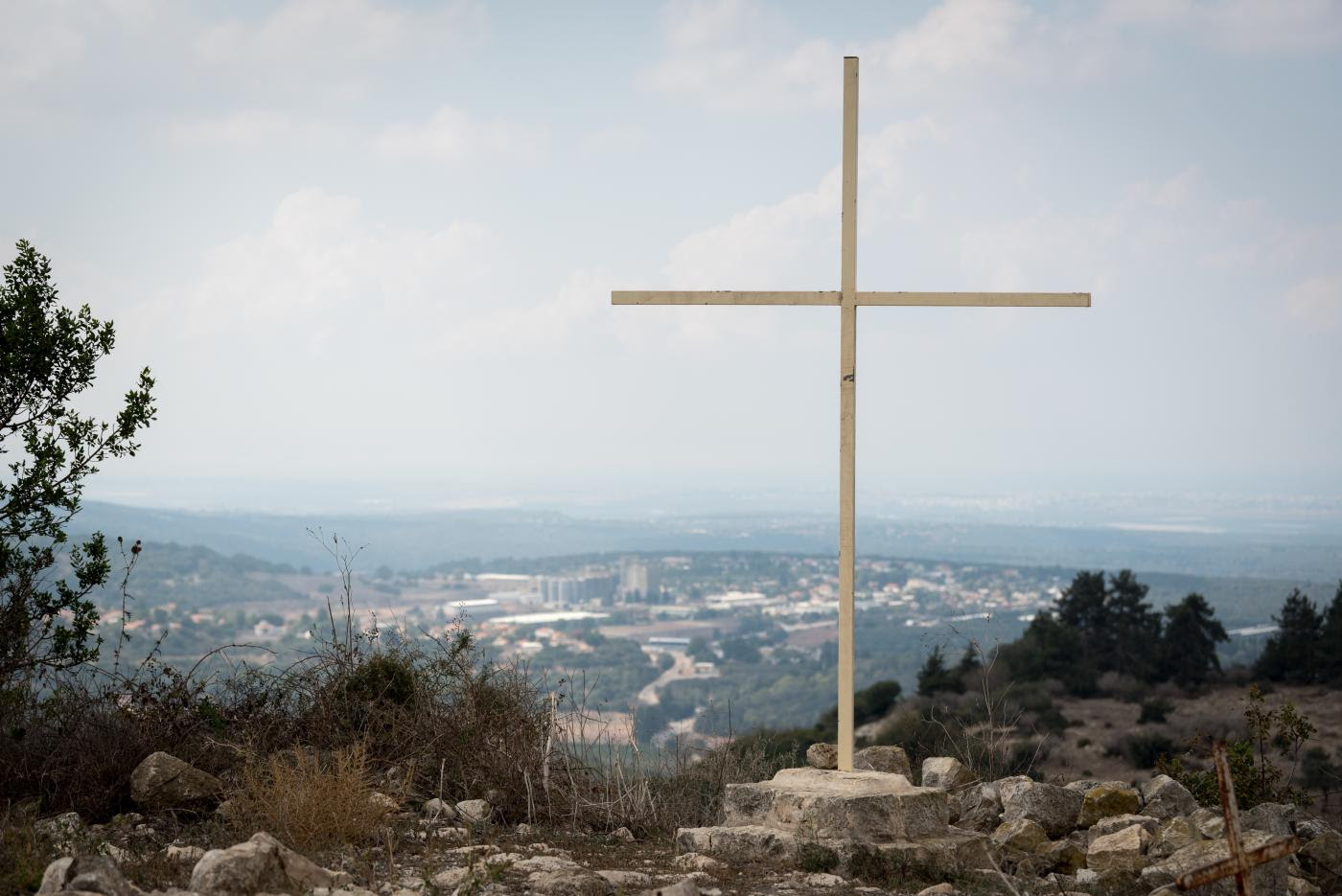
At the Palestinian village of Iqrit. Photo: Albin Hillert/WCC
23 January 2025

“Eastern and Western churches have used different calendars to calculate the date of Easter since the 16th century, and only rarely do they coincide,” said Prof. Rev. Dr Martin Illert, WCC programme executive for Faith and Order, who is organizing the webinar. 

“This year is one of the few occasions when all Christians will celebrate Easter together, and this webinar will explore how we can renew the search for a common date for Easter as a sign of Christian unity,” he said.

This webinar will bring together people from different traditions – Coptic, Eastern Orthodox, Catholic, and Lutheran – to explore how a shared celebration of Easter can unite Christians worldwide in their common faith in the resurrected Christ.

This year also marks the 1700th anniversary of the Council of Nicaea of 325 CE, the first ecumenical council gathering the whole of Christendom, which addressed the need for a common celebration of Easter since churches of that time often used different dates.

“We hope that the anniversary of Nicaea will help create a momentum so that in the future all Christians can celebrate Easter together,” said Illert.

The different dates for celebrating Easter go back to the reform of the calendar introduced by Pope Gregory XIII in 1582. Since that time, Western Christians have come to calculate the date of Easter on the basis of this newer Gregorian calendar, while the Eastern churches have continued to use the older Julian calendar. 

Webinar information

Date: 13 February 2025, 16:00 CET

Register: https://us02web.zoom.us/webinar/register/WN_RuLP2e18RBWCvWyzgAPrVA#/registration

Panelists: 

Fr Prof. Dr Arsenius Mikhail, St Athanasius and St Cyril Coptic Orthodox School, Newport Beach, California, USA.

H.E. Metropolitan Prof. Dr Job (Getcha), Metropolitan of Pisidia and Dean of the Institute for Orthodox Theology Higher Studies at Chambésy, Geneva, Switzerland.

Dr Johannes Oeldemann, Johann-Adam-Möhler-Institut für Ökumenik, Paderborn, Germany

Rev. Dr Tomi Karttunen, Executive Secretary for Ecumenical Relations and Theology, Lutheran Church of Finland.

Moderator:

Rev. Prof. em. Dr. Sandra Beardsall, moderator of the WCC-Nicaea-Steering-Group, Saskatchewan, Canada.

View the Event 

Download the Flyer for the Webinar 

Frequently Asked Questions about Easter

See more
The World Council of Churches on Facebook
The World Council of Churches on Twitter
The World Council of Churches on Instagram
The World Council of Churches on YouTube
World Council of Churches on SoundCloud
The World Council of Churches' website
The World Council of Churches promotes Christian unity in faith, witness and service for a just and peaceful world. An ecumenical fellowship of churches founded in 1948, today the WCC brings together 352 Protestant, Orthodox, Anglican and other churches representing more than 580 million Christians in over 120 countries, and works cooperatively with the Roman Catholic Church. The WCC general secretary is Rev. Prof. Dr Jerry Pillay from the Uniting Presbyterian Church in Southern Africa.

Media contact: +41 79 507 6363; www.oikoumene.org/press
Our visiting address is:
World Council of Churches
Chemin du Pommier 42
Kyoto Building
Le Grand-Saconnex CH-1218
Switzerland

Praising the Lord at Country Springs - Sunday, January 19, 2025

Sligo Presbyterian Church: Our Congregation and Community: Praising the Lord at Country Springs - Sunday, Jan...: The Sligo Presbyterian Church Board of Deacons sponsors a worship service at the Country Springs Retirement & Assisted Living Facility. ...

The Sligo Presbyterian Church Celebration Service - Sunday, January 19, 2025

Sligo Presbyterian Church: Our Congregation and Community: The Sligo Presbyterian Church Celebration Service ...: Depending on your experience, you may wonder if healthy relationships are even possible. There’s a lot of brokenness in the world; therefore...

Sunday's Message - Keys to Healthy Relationships: Humility

Sligo Presbyterian Church: Our Congregation and Community: Sunday's Message - Keys to Healthy Relationships: ...: Depending on your experience, you may wonder if healthy relationships are even possible. There’s a lot of brokenness in the world; therefore...

Wednesday, January 22, 2025

WCC News: Behind the scenes: preparing for Week of Prayer for Christian Unity invoked hope in a common faith

As the Week of Prayer for Christian Unity takes place from 18-25 January, Br Guido Dotti from the Monastic Community of Bose, Italy, reflects on what it was like to prepare the materials for the largest global prayer gathering. 
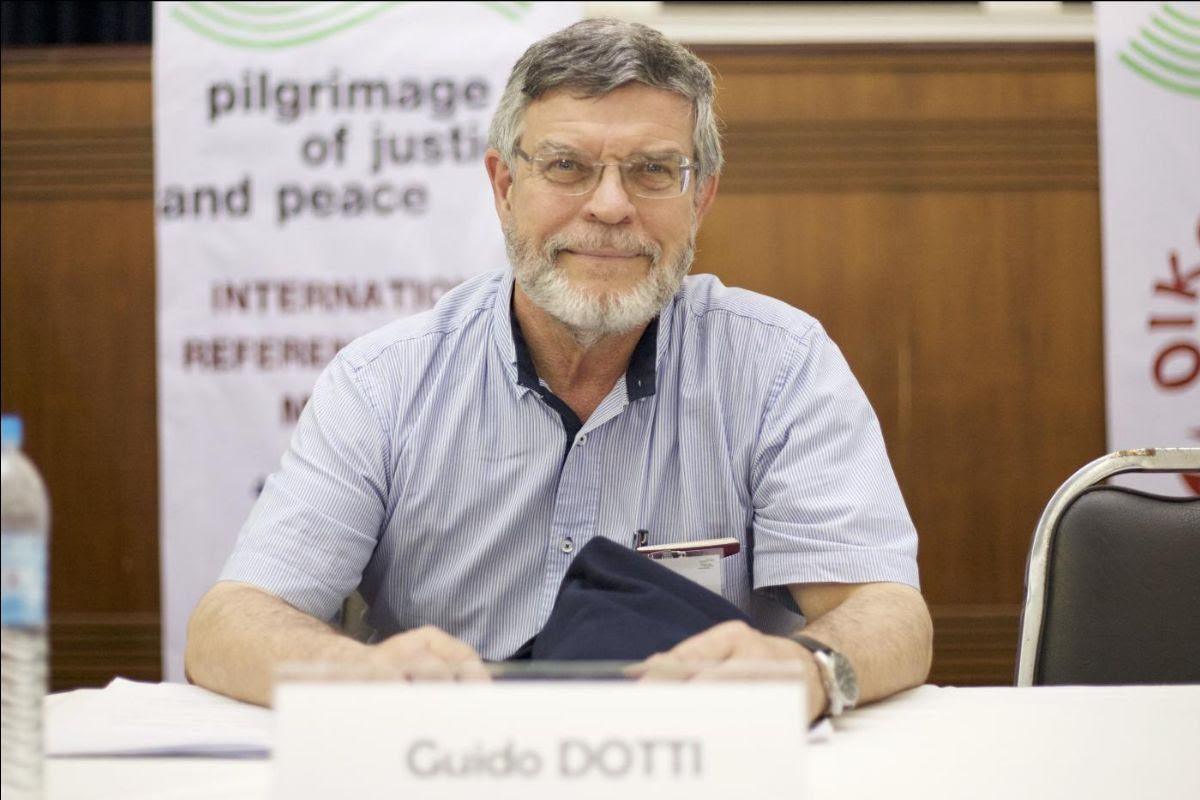
Br Guido Dotti from the Monastic Community of Bose (Italy), member of the Week of Prayer for Christian Unity 2025 resources drafting group. Photo: WCC
22 January 2025

Can you describe the work behind the prayers, how it felt to you?

Br Guido: When the WCC and the Dicastery for the Promotion of Christian Unity asked our monastic community - composed of brothers and sisters from different Christian denominations (Roman Catholic, Reformed, Orthodox) - to prepare the materials for the Week of Prayer for Christian Unity for this year, marked by the 1700th anniversary of the First Ecumenical Council (Nicaea 325 CE), we decided all together to use a passage from the Gospel to John as the theme: "Do you believe this?” (John 11:26) and to focus the moments of prayer around the confession of faith that emerged from the First Ecumenical Council. Subsequently, several brothers and sisters thought of patristic texts from the first centuries, belonging to the different traditions of East and West, in order to show how the themes addressed at Nicaea were, on the one hand, the fruit of the generation of Christians emerging from persecution and, on the other hand, had shaped subsequent theological and spiritual thought. The discussion, in-depth study, and finalisation of the texts with the international commission during several days of work at the Monastery of Bose made it possible to live also in the preparation of the prayers the ancient adage that states that "what concerns all, by all must be discussed.”

What is your hope for the worldwide use of the prayers? 

Br Guido: When developing a text intended to help Christians of every language, people, and cultural tradition pray, the hope is that it can be a faithful echo of how the church hears and puts into practice the call of the Gospel in changing circumstances of time and place. The hope is that the words and thoughts that have emerged in a specific local reality will be able to express the common faith and animate the prayers of so many brothers and sisters spread across five continents.

In what ways did you rediscover the past and the present with your work? 

Br Guido: The aspect that struck me most in collaborating to produce these resources was to see how our fathers and mothers in the faith - only a dozen years after coming out of the great pit of persecution - decided to come together to try to be docile to the Lord's will in the new reality that was opening up before them: a reality of freedom in bearing witness to one's faith, but also of diversity of languages and cultures in which the Gospel had to be proclaimed and incarnated.

Today, in our societies that are no longer Christian, we are faced with a similar challenge: to find the languages - that is, words, gestures and actions - most suitable for proclaiming the good news of the Gospel to our sisters and brothers in humanity. In fact, “Christ is the same yesterday, today, and always” (Hebrews 13:8), but the proclamation of his victory over death must “become all things to all people” (1 Corinthians 9:22) in order to reach every human being where they are, in their daily existence, in their living environment. 

“Do you believe this?” Believing in the resurrection, today as yesterday, means believing that hatred is vanquished by love, death is vanquished by life, and being in our turn credible witnesses of this truth.

Resources for the Week of Prayer for Christian Unity 2025

Reading plan on the Youversion Bible app

Learn more about the Week of Prayer for Christian Unity

See more
The World Council of Churches on Twitter
The World Council of Churches on Facebook
The World Council of Churches' website
The World Council of Churches on Instagram
The World Council of Churches on YouTube
SoundCloud
The World Council of Churches promotes Christian unity in faith, witness and service for a just and peaceful world. An ecumenical fellowship of churches founded in 1948, today the WCC brings together 352 Protestant, Orthodox, Anglican and other churches representing more than 580 million Christians in over 120 countries, and works cooperatively with the Roman Catholic Church. The WCC general secretary is Rev. Prof. Dr Jerry Pillay from the Uniting Presbyterian Church in Southern Africa. 

Media contact: +41 79 507 6363; www.oikoumene.org/press
Our visiting address is:
World Council of Churches
Chemin du Pommier 42
Kyoto Building
Le Grand-Saconnex CH-1218
Switzerland

Tuesday, January 21, 2025

Looking into the lectionary - A prayer for Inauguration (and MLK) Day

February 2, 2025
Fourth Sunday after the Epiphany

Luke 4:21-30

Confession: Sometimes I want to throw Jesus off a cliff.

When Jesus highlights the fact that there are a bunch of people out there who are suffering, but that God only decides to intervene in a few of their lives for the better, that wild impulse comes on strong.

My mother died of lung cancer in 2011. She was diagnosed in 2008. In 2008, the five-year survival rate for lung cancer hovered around 1 in 5. So, there was an 80% chance my mother would die before 2013. And she did. That’s how life and death works in our world, and I understand that. Of course, everyone who loves anyone with a fatal disease prays and hopes that their loved one is one of the 20% who live beyond five years. But the odds are not in favor of such an outcome.

I can accept that.

I can accept that until Jesus, who has exhibited the power to heal, stands in front of me and tells me, in an off-the-cuff sort of way, that there were many with a skin disease in Israel in the time of the prophet Elisha, and none of them were cleansed except Naaman the Syrian (v. 27). I can accept the reality of random death, but when Jesus preaches that there were five women with lung cancer and God plucked one of them – specifically, not my mother – to be healed, I am filled with rage. ...

Thank you to this week's writer Walter Canter.

Read the rest of the commentary on the website.

Order of worship — February 2, 2025, by Walter Canter
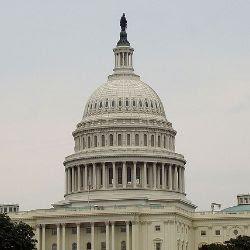
Inauguration Day prayer by Teri McDowell Ott
Living the Lord’s Prayer: Generosity and trust (February 2, 2025) by Savannah Demuynck
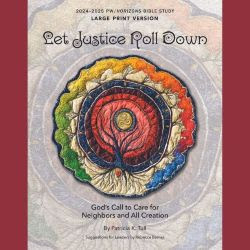
Horizons — Climate change by Rosalind Banbury
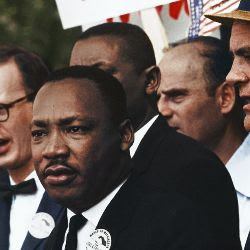
Prayer for Martin Luther King Jr. Day by Jill Duffield
The end of the Office of Theology and Worship by Charles Aden Wiley, III and Martha Moore-Keish
Want the worship resources for January 26, 2024? You can find them here.
Did you know loneliness is America’s most significant health problem, according to Surgeon General Dr. Vivek H. Murthy in 2022? Explore biblical wisdom and practical steps to cultivate meaningful friendships with this “Friendship” Bible study by Katy Shevel.

IN CASE YOU MISSED IT...


MRTI adds 10 fossil fuel companies, four countries to divestment list
Decisions made by last summer's GA226 expand the prohibited securities for PC(USA) agencies. — Gregg Brekke

Pardon me, Jesus
In response to recent presidential pardons, Joshua Gritter explores the tensions of justice and mercy.

Three Earth Care Award winners honored at Presbyterians for Earth Care annual gathering
Presbyterians for Earth Care (PEC) recognized two individuals and one congregation for their exceptional environmental achievements at their virtual Annual Gathering. — News from other sources

The holy trinity of public theology
What if there's also a rhythmic circle, giving a never-ending space for the dance of proclamation, advocacy and creativity? Jack Miller writes.

Pennsylvania church surrenders part of the proceeds of the sale of its manse to the Lenape people
During Advent, First Presbyterian Church of Lansdowne held a moving and meaningful service of surrender. — Mike Ferguson

Presbyterians in Pakistan: A historic reunification
Three oppositional Presbyterian parties in Pakistan united recently, settling their differences and ending several years of hostility. — Jack Haberer
Facebook
Instagram
Threads

Prayers for Our Community, Our Nation and Our World

We can offer specific daily prayers for our community, nation and world. Between Monday, October 12 and Sunday, October 18, we'll lay b...