Showing posts with label Christian unity. Show all posts

Monday, January 19, 2026

WCC News: Prayer highlights Christian unity as a necessity, not a luxury

A morning prayer at the Ecumenical Centre on 19 January highlighted the annual observance of the 2026 Week of Prayer for Christian Unity. In a reflection, Rev. Archimandrite Garegin Hambardzumyan from the Mother See of Holy Etchmiadzin, Armenia, highlighted how the resources for the special week draw on the spiritual and theological heritage of St Nerses the Gracious.
Rev. Archimandrite Garegin Hambardzumyan from the Inter-Church Relations Department of the Armenian Apostolic Church. Photo: Ivars Kupcis/WCC
19 January 2026

For the year 2026, the prayers and reflections for the Week of Prayer for Christian Unity were prepared by the Inter-Church Relations Department of the Armenian Apostolic Church, along with their brothers and sisters of the Armenian Catholic and Evangelical Churches. 

“Together with our international sisters and brothers from the World Council of Churches and the Vatican, we approached it with humility, aware that what we were offering belonged not to us alone, but to the whole Body of Christ,” said Hambardzumyan. “We are grateful that the prayers, hymns, and reflections born within our tradition are now being received, prayed, and lived by Christians across the world.”

The theme for 2026 comes from Saint Paul's Letter to the Ephesians: "There is one body and one Spirit, just as you were called to the one hope of your calling." 

Hambardzumyan reflected that these words invite us first to recognition before action.  “Unity, Saint Paul tells us, is not primarily our achievement,” he said. “It is God's gift.”

At the same time, Hambardzumyan noted, Saint Paul is deeply realistic. “He knows that unity, though given, can be wounded,” said Hambardzumyan. “Unity does not grow through pressure, haste, or forced agreement. It grows through humility that listens, patience that endures, and love that is willing to carry the weight of difference.”

Hambardzumyan noted that this path is beautifully illuminated by St Nerses the Gracious, Shnorhali, whose prayers, hymns, and theological vision shape the materials for the Week of Prayer for Christian Unity. 

“For St Nerses, unity did not mean uniformity. He rejected any notion that unity could be achieved by diminishing doctrinal integrity or erasing liturgical and cultural identity. On the contrary, he insisted that each church must be respected in its doctrine, worship, discipline, and historical experience. Differences, he taught, are not obstacles when they are embraced with humility; they become gifts that enrich the Body of Christ rather than fragment it.”

Hambardzumyan said the Armenian churches wish to convey to their Christian sisters and brothers worldwide not only theological reflections, but a word of fraternity and encouragement.

“Our history has taught us what it means to suffer and to struggle for survival. It has also taught us the strength that comes from solidarity, faithfulness, and shared prayer,” he said. “In a world marked by war, injustice, and deep polarization, Christian unity is not a luxury. It is a necessity for credible witness to the Gospel.”

In conclusion, Hambardzumyan noted that Saint Paul urges us to "make every effort to maintain the unity of the Spirit in the bond of peace”—a demanding call.

“It requires perseverance, humility, and trust that the Holy Spirit is at work even when progress feels slow or fragile,” he said. “As we pray together during this Week of Prayer for Christian Unity, may we renew our commitment to this path. May we resist discouragement and impatience. May we learn again how to listen deeply, how to wait faithfully, and how to love generously.”

Resources for the Week of Prayer for Christian Unity are jointly published annually by the Dicastery for Promoting Christian Unity and the World Council of Churches.

Week of Prayer for Christian Unity 2026 invites Christians to one hope, one calling (WCC news release, 14 January 2026)

Learn more about the Week of Prayer for Christian Unity 2026

Reading plan on the Youversion Bible app

Social media cards and photos

Photos from the Prayer service at the Ecumenical Centre

See more
The World Council of Churches on Twitter
The World Council of Churches on Facebook
The World Council of Churches' website
The World Council of Churches on Instagram
The World Council of Churches on YouTube
SoundCloud
The World Council of Churches promotes Christian unity in faith, witness and service for a just and peaceful world. An ecumenical fellowship of churches founded in 1948, today the WCC brings together 356 Protestant, Orthodox, Anglican and other churches representing more than 580 million Christians in over 120 countries, and works cooperatively with the Roman Catholic Church. The WCC general secretary is Rev. Prof. Dr Jerry Pillay from the Uniting Presbyterian Church in Southern Africa. 

Media contact: +41 79 507 6363; www.oikoumene.org/press
Our visiting address is:
World Council of Churches
Chemin du Pommier 42
Kyoto Building
Le Grand-Saconnex CH-1218
Switzerland

Thursday, January 23, 2025

WCC NEWS: Webinar to explore common Easter celebration to strengthen Christian unity

In 2025, one of the few years when Christians of all traditions will celebrate Easter on the same date – 20 April – a webinar being organized by the World Council of Churches on 13 February will explore how churches might renew the search for a common Easter date as a sign of their unity in faith.
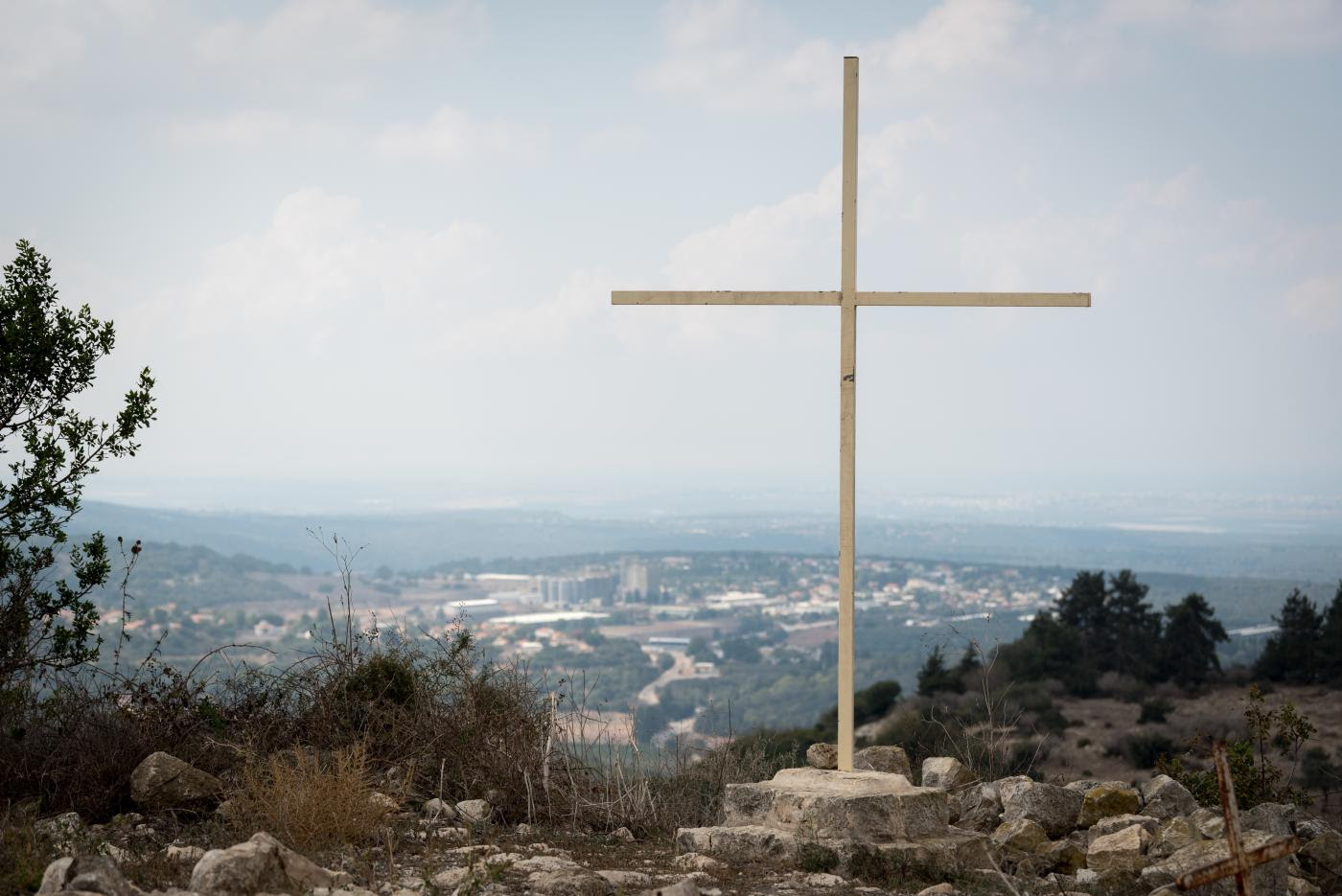
At the Palestinian village of Iqrit. Photo: Albin Hillert/WCC
23 January 2025

“Eastern and Western churches have used different calendars to calculate the date of Easter since the 16th century, and only rarely do they coincide,” said Prof. Rev. Dr Martin Illert, WCC programme executive for Faith and Order, who is organizing the webinar. 

“This year is one of the few occasions when all Christians will celebrate Easter together, and this webinar will explore how we can renew the search for a common date for Easter as a sign of Christian unity,” he said.

This webinar will bring together people from different traditions – Coptic, Eastern Orthodox, Catholic, and Lutheran – to explore how a shared celebration of Easter can unite Christians worldwide in their common faith in the resurrected Christ.

This year also marks the 1700th anniversary of the Council of Nicaea of 325 CE, the first ecumenical council gathering the whole of Christendom, which addressed the need for a common celebration of Easter since churches of that time often used different dates.

“We hope that the anniversary of Nicaea will help create a momentum so that in the future all Christians can celebrate Easter together,” said Illert.

The different dates for celebrating Easter go back to the reform of the calendar introduced by Pope Gregory XIII in 1582. Since that time, Western Christians have come to calculate the date of Easter on the basis of this newer Gregorian calendar, while the Eastern churches have continued to use the older Julian calendar. 

Webinar information

Date: 13 February 2025, 16:00 CET

Register: https://us02web.zoom.us/webinar/register/WN_RuLP2e18RBWCvWyzgAPrVA#/registration

Panelists: 

Fr Prof. Dr Arsenius Mikhail, St Athanasius and St Cyril Coptic Orthodox School, Newport Beach, California, USA.

H.E. Metropolitan Prof. Dr Job (Getcha), Metropolitan of Pisidia and Dean of the Institute for Orthodox Theology Higher Studies at Chambésy, Geneva, Switzerland.

Dr Johannes Oeldemann, Johann-Adam-Möhler-Institut für Ökumenik, Paderborn, Germany

Rev. Dr Tomi Karttunen, Executive Secretary for Ecumenical Relations and Theology, Lutheran Church of Finland.

Moderator:

Rev. Prof. em. Dr. Sandra Beardsall, moderator of the WCC-Nicaea-Steering-Group, Saskatchewan, Canada.

View the Event 

Download the Flyer for the Webinar 

Frequently Asked Questions about Easter

See more
The World Council of Churches on Facebook
The World Council of Churches on Twitter
The World Council of Churches on Instagram
The World Council of Churches on YouTube
World Council of Churches on SoundCloud
The World Council of Churches' website
The World Council of Churches promotes Christian unity in faith, witness and service for a just and peaceful world. An ecumenical fellowship of churches founded in 1948, today the WCC brings together 352 Protestant, Orthodox, Anglican and other churches representing more than 580 million Christians in over 120 countries, and works cooperatively with the Roman Catholic Church. The WCC general secretary is Rev. Prof. Dr Jerry Pillay from the Uniting Presbyterian Church in Southern Africa.

Media contact: +41 79 507 6363; www.oikoumene.org/press
Our visiting address is:
World Council of Churches
Chemin du Pommier 42
Kyoto Building
Le Grand-Saconnex CH-1218
Switzerland

Prayers for Our Community, Our Nation and Our World

We can offer specific daily prayers for our community, nation and world. Between Monday, October 12 and Sunday, October 18, we'll lay b...