Tuesday, March 2, 2021

Looking into the lectionary — Ten Commandments

Exodus 20:1-17 — March 7, 2021
3rd Sunday in Lent
One of the best ways to teach and learn theology is through liturgy, because the patterns and practices of worship are theological exercises. 
They give expression to what we believe about God and about our covenant relationship with God.  The text for the Third Sunday in Lent, narrating the Ten Commandments in Exodus 20:1-17, has played a significant role in Reformed worship in this regard. Indeed, in John Calvin’s Strasbourg Liturgy of 1545, the Ten Commandments were sung in worship, immediately following the prayer of confession and assurance of pardon. Having been restored to right standing with God and with one another, recitation of the Ten Commandments provided a sense of direction for renewed disciples by which they might enter ever more deeply into the Christian life. This understanding of the role of the Ten Commandments as a guide for the life of discipleship continues to inform Presbyterian engagement with them. Since we are all experimenting with new experiences of worship as we navigate pandemic challenges, it is an opportune time to consider the traditional role of this text in the worship of our forbearers, and the import of their engagement with it on the heels of confession of sin and assurance of pardon.
 
In both the old (1993) and new (2018) editions of the Presbyterian Book of Common Worship, the confession of sin and assurance of pardon are followed by a summary of the law — such as John 13:34, Jesus’ new commandment for his disciples: “Love one another as I have loved you.” Alternatively, we can recite the Ten Commandments. In fact, I would encourage you to try Calvin’s practice of including the Ten Commandments in worship immediately after the prayer of confession. You could do this easily on Zoom, perhaps by drafting 10 people, each assigned one of the commandments, to read them in turn as part of a liturgical hearing of them. On the Third Sunday in Lent when Exodus 20 is featured in the lectionary, preachers also might want to consider expounding on this text, explaining why the pattern of confession, assurance of pardon and a recitation of the law of God has played a crucial role in the worship life of our theological ancestors, shaping their understanding of their relationships with God and with one another. Think of it as an opportune teaching moment! Some may be in need of it. 
 
Why? In our day and time, some consider confession of sin an archaic practice — one that introduces an unwelcome note of negativity into an otherwise positive worship experience. So it might well be important to articulate why the confession of sin is a crucial dimension of Reformed worship. We could even call it an act of public theology by which we make an open and communal expression of human transgression — of our individual and corporate failures to love God and neighbors. As such, it is a disruptive, countercultural act in a society that falsely proclaims innocence of sins like racism, sexism and classism. On the contrary, honesty compels acknowledgement that our sins are deep and pervasive. But we are not left in this predicament of bondage to sin. On the heels of confession of sin, the assurance of pardon announces the good news of our redemption in Jesus Christ. By the grace of God in Christ, we are restored to right standing with God and one another. This assurance is followed by a reading of commandments to direct our steps: the commandment to love one another (as in John 13:34), or the Great Commandment that Jesus gave us, calling us to love of God and love of neighbor as self (Mark 12:38-31). Or, you could also follow Calvin’s practice and recite the Ten Commandments at this point — especially on this Sunday when Exodus 20:1-17 is featured in the lectionary. 

A sermon (or a series of sermons) on The Ten Commandments could follow. The sermon might explore how, in and through the commandments, God seeks a covenant relationship with us — one that is empowered by the Holy Spirit and embodied in our present context. Theologian John Burgess helpfully notes in “After Baptism: Shaping the Christian Life” that the Protestant Reformers explicated the Ten Commandments in three different ways, all of which can help us interpret their relevance for our lives today: by broadening, internalizing and reversing them. For example, the commandment “Do not kill” can be broadened to include the many ways in which we wound others, not only through physical acts of violence, but also through hurtful words or deeds. This particular commandment can also be internalized to include prohibition of emotions like hating or despising others in its purview. And it can be reversed to advocate reverence for life and attention to life-giving work that promotes the flourishing of others. Interpreting the Ten Commandments in these ways follows the pattern of Jesus himself in the Sermon on the Mount, who expanded the commandment against murder to include anger and insults against another in its scope (Matthew 5:21-22).  
 
When the commandments are engaged in the manners described above, they also conform to what John Calvin called “the third and principal use of the law,” which is to guide believers in the Christian life. In other words, engagement with the Ten Commandments shapes us for life that follows the way of God in Christ. This is part of God’s own work in us, forming in us the mind of Christ. As theologian Douglas Ottati observes in “A Theology for the Twenty-First Century,” thinking of the Ten Commandments in this way helps us to see that “the law is not a burden unwillingly forced upon us so much as it is our joy and delight.” This is an important corrective to inaccurate caricatures of Jewish law as “legalistic” and restrictive. On the contrary, the Jewish tradition out of which Jesus came saw the law as a gift of God’s expansive grace. 
 
One final ritual moment in Reformed worship might also be worth noting: the passing of the peace. The Presbyterian Book of Common Worship recommends that it follow the acts of confession, assurance of pardon and recitation of the law. The passing of the peace thereby concludes the practice of confession. This makes it much more than a way to greet fellow worshippers and welcome visitors; it is a sign in this world of an alternative community based in forgiveness and justice-seeking love — the very ideals promoted in the confession, assurance of pardon and recitation of the law. Indeed, theologian Luke Bretherton suggests that the liturgical practice of sharing a sign of peace with one another has the potential to constitute an alternative social order, for the ritual is shared in the midst of contexts that are themselves distorted and divided around issues of gender, race, sexuality and class. Passing the peace of Christ with one another bears witness in this world to a different reality. As Bretherton observes in “Christ and the Common Life,” the sign of peace makes the divisions of the world visible and at the same time gestures “toward the possibility of their transfiguration. … For fallen creatures, transfiguration entails a threefold movement of conversion involving healing, exorcism/deliverance … and the formation of new, eschatologically anticipative ways of being alive with and for others.”
 
Taken together, the confession and pardon, the recitation of the law and the passing of the peace can enable us to hear and embody the Word of God for us today — to become the kind of community that seeks transformation in our world. Sometimes these practices may strike us as awkward, or even messy and disruptive — perhaps especially in online worship on Zoom! But God in Christ is in the disruptive work of bringing life out of the messy stuff of our world.  May it be so.
 
This week:

1.     How are the patterns and practices of worship great ways to teach and learn about our relation to God and one another? 

2.     What do you think about reciting the Ten Commandments after the confession of sin and assurance of pardon?

3.     How would you interpret each of the Ten Commandments according to the model of broadening, internalizing and reversing? 

4.     What do you think of Calvin’s notion of the “third and principal use of the law”?

5.     How might you consider the law a joy and delight or a gift of expansive grace?

6.     How, in your context, might the passing of the peace (after the confession, pardon and reciting of the law) constitute an alternative social order?
Campus chaplains invite students into practices of hospitality, exploration, community and service, and in so doing they welcome the work of the Holy Spirit to guide the process of faith formation.

Spiritual friendship
Becoming Brave: Finding the Courage to Pursue Racial Justice Now
Thin places — Here,
there or everywhere?
Facebook ‌ Twitter ‌ Pinterest ‌ Instagram ‌

The Presbyterian Outlook | 1 N. 5th St., Suite 500, Richmond, VA 23219

Monday, March 1, 2021

A Thought from the Word

A brief thought based on 2 Timothy 1:7 - “God's Spirit doesn't make cowards out of us. The Spirit gives us power, love, and self-control.”

The Lectionary Passages for Sunday, March 1, 2021 (3rd Sunday in Lent)

Below are NRSV translations of the lessons from the Old Testament (Exodus 20:1-17), the Psalms (Psalm 19), the Letters (1 Corinthians 1:18-25) and the Gospels (John 2:13-22). Please make any comments concerning the passages you want. Together, let's discuss the Word of God.
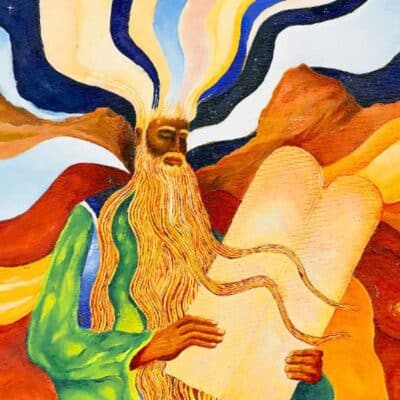
Exodus 20:1-17

Then God spoke all these words: I am the Lord your God, who brought you out of the land of Egypt, out of the house of slavery; you shall have no other gods before me. You shall not make for yourself an idol, whether in the form of anything that is in heaven above, or that is on the earth beneath, or that is in the water under the earth. You shall not bow down to them or worship them; for I the Lord your God am a jealous God, punishing children for the iniquity of parents, to the third and the fourth generation of those who reject me, but showing steadfast love to the thousandth generation of those who love me and keep my commandments. You shall not make wrongful use of the name of the Lord your God, for the Lord will not acquit anyone who misuses his name. Remember the sabbath day, and keep it holy. Six days you shall labor and do all your work. But the seventh day is a sabbath to the Lord your God; you shall not do any work—you, your son or your daughter, your male or female slave, your livestock, or the alien resident in your towns. For in six days the Lord made heaven and earth, the sea, and all that is in them, but rested the seventh day; therefore the Lord blessed the sabbath day and consecrated it.

Honor your father and your mother, so that your days may be long in the land that the Lord your God is giving you. You shall not murder. You shall not commit adultery. You shall not steal. You shall not bear false witness against your neighbor. You shall not covet your neighbor’s house; you shall not covet your neighbor’s wife, or male or female slave, or ox, or donkey, or anything that belongs to your neighbor.

Psalm 19

The heavens are telling the glory of God; and the firmament proclaims his handiwork.

Day to day pours forth speech, and night to night declares knowledge.

There is no speech, nor are there words; their voice is not heard;

yet their voice goes out through all the earth, and their words to the end of the world. In the heavens he has set a tent for the sun,

which comes out like a bridegroom from his wedding canopy, and like a strong man runs its course with joy.

Its rising is from the end of the heavens, and its circuit to the end of them; and nothing is hid from its heat.

The law of the Lord is perfect, reviving the soul; the decrees of the Lord are sure, making wise the simple;

the precepts of the Lord are right, rejoicing the heart; the commandment of the Lord is clear, enlightening the eyes;

the fear of the Lord is pure, enduring forever; the ordinances of the Lord are true and righteous altogether.

More to be desired are they than gold, even much fine gold; sweeter also than honey, and drippings of the honeycomb.

Moreover by them is your servant warned; in keeping them there is great reward.

But who can detect their errors? Clear me from hidden faults.

Keep back your servant also from the insolent; do not let them have dominion over me. Then I shall be blameless, and innocent of great transgression.

Let the words of my mouth and the meditation of my heart be acceptable to you, O Lord, my rock and my redeemer.

1 Corinthians 1:18-25

For the message about the cross is foolishness to those who are perishing, but to us who are being saved it is the power of God. For it is written, “I will destroy the wisdom of the wise, and the discernment of the discerning I will thwart.” Where is the one who is wise? Where is the scribe? Where is the debater of this age? Has not God made foolish the wisdom of the world? For since, in the wisdom of God, the world did not know God through wisdom, God decided, through the foolishness of our proclamation, to save those who believe. For Jews demand signs and Greeks desire wisdom, but we proclaim Christ crucified, a stumbling block to Jews and foolishness to Gentiles, but to those who are the called, both Jews and Greeks, Christ the power of God and the wisdom of God. For God’s foolishness is wiser than human wisdom, and God’s weakness is stronger than human strength.

John 2:13-22

The Passover of the Jews was near, and Jesus went up to Jerusalem. In the temple he found people selling cattle, sheep, and doves, and the money changers seated at their tables. Making a whip of cords, he drove all of them out of the temple, both the sheep and the cattle. He also poured out the coins of the money changers and overturned their tables. He told those who were selling the doves, “Take these things out of here! Stop making my Father’s house a marketplace!” His disciples remembered that it was written, “Zeal for your house will consume me.” The Jews then said to him, “What sign can you show us for doing this?” Jesus answered them, “Destroy this temple, and in three days I will raise it up.” The Jews then said, “This temple has been under construction for forty-six years, and will you raise it up in three days?” But he was speaking of the temple of his body. After he was raised from the dead, his disciples remembered that he had said this; and they believed the scripture and the word that Jesus had spoken.

#Pray4PPL TrustGod2BRefuge&Guide

Life Support Prayer Calendar 

Dear Prayer Team Member,

Both individuals and organizations are challenged to find their way in our current world. I'm so grateful we have a guide in the Holy Spirit sent from God! I hope as you pray this week you will find comfort in the images of Psalm 31 and the staff and board of PPL are grateful for your prayers for us as we seek God's guidance for our work of equipping churches in an ever-changing landscape.

Psalm 31:1-5 (MSG)


I run to you, God;

I run for dear life.

Don’t let me down!

Take me seriously this time!

Get down on my level and listen,   

and please—no procrastination!


Your granite cave a hiding place,   

your high cliff aerie a place of safety.

You’re my cave to hide in,   

my cliff to climb.


Be my safe leader,   

be my true mountain guide.

Free me from hidden traps;   

I want to hide in you.

I’ve put my life in your hands.   

You won’t drop me,   

you’ll never let me down.

Feb 28 - Mar 6, 2021


1. Give praise to God who is both hiding place and fortress when we feel overwhelmed and exhausted as champions of life.


​2. Pray for women, who are alone and afraid during pregnancy, to turn to God and find safety and defense against those who advise abortion as a solution.


Prayers for Our Community, Our Nation and Our World

We can offer specific daily prayers for our community, nation and world. Between Monday, October 19 and Sunday, October 25, we'll lay b...