Showing posts with label 1 Corinthians. Show all posts

Tuesday, March 30, 2021

The Lectionary Passages for Sunday, April 4, 2021 (Resurrection of the Lord, Easter)

Below are NRSV translations of the lessons from the Old Testament (Isaiah 25:6-9), Psalms (Psalm 118:1-2, 14-24), the Letters (1 Corinthians 15:1-11 or Acts 10:34-43), and the Gospels (John 20:1-18 or Mark 16:1-8) Please make any comments concerning the passages you want. Together, let's discuss the Word of God.

Isaiah 25:6-9

On this mountain the Lord of hosts will make for all peoples a feast of rich food, a feast of well-aged wines, of rich food filled with marrow, of well-aged wines strained clear. And he will destroy on this mountain the shroud that is cast over all peoples, the sheet that is spread over all nations; he will swallow up death forever. Then the Lord God will wipe away the tears from all faces, and the disgrace of his people he will take away from all the earth, for the Lord has spoken.

It will be said on that day, Lo, this is our God; we have waited for him, so that he might save us. This is the Lord for whom we have waited; let us be glad and rejoice in his salvation.

Psalm 118:1-2, 14-24

O give thanks to the Lord, for he is good; his steadfast love endures forever!

Let Israel say, “His steadfast love endures forever.”

The Lord is my strength and my might; he has become my salvation.

There are glad songs of victory in the tents of the righteous: “The right hand of the Lord does valiantly;

the right hand of the Lord is exalted; the right hand of the Lord does valiantly.”

I shall not die, but I shall live, and recount the deeds of the Lord.

The Lord has punished me severely, but he did not give me over to death.

Open to me the gates of righteousness, that I may enter through them and give thanks to the Lord.

This is the gate of the Lord; the righteous shall enter through it.

I thank you that you have answered me and have become my salvation.

The stone that the builders rejected has become the chief cornerstone.

This is the Lord’s doing; it is marvelous in our eyes.

This is the day that the Lord has made; let us rejoice and be glad in it.

Acts 10:34-43

Then Peter began to speak to them: “I truly understand that God shows no partiality, but in every nation anyone who fears him and does what is right is acceptable to him. You know the message he sent to the people of Israel, preaching peace by Jesus Christ—he is Lord of all. That message spread throughout Judea, beginning in Galilee after the baptism that John announced: how God anointed Jesus of Nazareth with the Holy Spirit and with power; how he went about doing good and healing all who were oppressed by the devil, for God was with him. We are witnesses to all that he did both in Judea and in Jerusalem. They put him to death by hanging him on a tree; but God raised him on the third day and allowed him to appear, not to all the people but to us who were chosen by God as witnesses, and who ate and drank with him after he rose from the dead. He commanded us to preach to the people and to testify that he is the one ordained by God as judge of the living and the dead. All the prophets testify about him that everyone who believes in him receives forgiveness of sins through his name.”

1 Corinthians 15:1-11

Now I would remind you, brothers and sisters, of the good news that I proclaimed to you, which you in turn received, in which also you stand, through which also you are being saved, if you hold firmly to the message that I proclaimed to you—unless you have come to believe in vain. For I handed on to you as of first importance what I in turn had received: that Christ died for our sins in accordance with the scriptures, and that he was buried, and that he was raised on the third day in accordance with the scriptures, and that he appeared to Cephas, then to the twelve. Then he appeared to more than five hundred brothers and sisters at one time, most of whom are still alive, though some have died. Then he appeared to James, then to all the apostles. Last of all, as to one untimely born, he appeared also to me. For I am the least of the apostles, unfit to be called an apostle, because I persecuted the church of God. But by the grace of God I am what I am, and his grace toward me has not been in vain. On the contrary, I worked harder than any of them—though it was not I, but the grace of God that is with me. Whether then it was I or they, so we proclaim and so you have come to believe.

Mark 16:1-8

When the sabbath was over, Mary Magdalene, and Mary the mother of James, and Salome bought spices, so that they might go and anoint him. And very early on the first day of the week, when the sun had risen, they went to the tomb. They had been saying to one another, “Who will roll away the stone for us from the entrance to the tomb?” When they looked up, they saw that the stone, which was very large, had already been rolled back. As they entered the tomb, they saw a young man, dressed in a white robe, sitting on the right side; and they were alarmed. But he said to them, “Do not be alarmed; you are looking for Jesus of Nazareth, who was crucified. He has been raised; he is not here. Look, there is the place they laid him. But go, tell his disciples and Peter that he is going ahead of you to Galilee; there you will see him, just as he told you.” So they went out and fled from the tomb, for terror and amazement had seized them; and they said nothing to anyone, for they were afraid.


John 20:1-18

Early on the first day of the week, while it was still dark, Mary Magdalene came to the tomb and saw that the stone had been removed from the tomb. So she ran and went to Simon Peter and the other disciple, the one whom Jesus loved, and said to them, “They have taken the Lord out of the tomb, and we do not know where they have laid him.” Then Peter and the other disciple set out and went toward the tomb. The two were running together, but the other disciple outran Peter and reached the tomb first. He bent down to look in and saw the linen wrappings lying there, but he did not go in. Then Simon Peter came, following him, and went into the tomb. He saw the linen wrappings lying there, and the cloth that had been on Jesus’ head, not lying with the linen wrappings but rolled up in a place by itself. Then the other disciple, who reached the tomb first, also went in, and he saw and believed; for as yet they did not understand the scripture, that he must rise from the dead. Then the disciples returned to their homes.

But Mary stood weeping outside the tomb. As she wept, she bent over to look into the tomb; and she saw two angels in white, sitting where the body of Jesus had been lying, one at the head and the other at the feet. They said to her, “Woman, why are you weeping?” She said to them, “They have taken away my Lord, and I do not know where they have laid him.” When she had said this, she turned around and saw Jesus standing there, but she did not know that it was Jesus. Jesus said to her, “Woman, why are you weeping? Whom are you looking for?” Supposing him to be the gardener, she said to him, “Sir, if you have carried him away, tell me where you have laid him, and I will take him away.” Jesus said to her, “Mary!” She turned and said to him in Hebrew, “Rabbouni!” (which means Teacher). Jesus said to her, “Do not hold on to me, because I have not yet ascended to the Father. But go to my brothers and say to them, ‘I am ascending to my Father and your Father, to my God and your God.’” Mary Magdalene went and announced to the disciples, “I have seen the Lord”; and she told them that he had said these things to her.


The Lectionary Passages for Thursday, April 1, 2021 (Maundy Thursday)

Below are NRSV translations of the lessons from the Old Testament (Exodus 12:1-4, (5-10), 11-14), Psalms (Psalm 116:1-2, 12-19), the Letters (1 Corinthians 11:23-26), and the Gospels (John 13:1-17, 31b-35) Please make any comments concerning the passages you want. Together, let's discuss the Word of God.

Exodus 12:1-14

The Lord said to Moses and Aaron in the land of Egypt: This month shall mark for you the beginning of months; it shall be the first month of the year for you. Tell the whole congregation of Israel that on the tenth of this month they are to take a lamb for each family, a lamb for each household. If a household is too small for a whole lamb, it shall join its closest neighbor in obtaining one; the lamb shall be divided in proportion to the number of people who eat of it. Your lamb shall be without blemish, a year-old male; you may take it from the sheep or from the goats. You shall keep it until the fourteenth day of this month; then the whole assembled congregation of Israel shall slaughter it at twilight. They shall take some of the blood and put it on the two doorposts and the lintel of the houses in which they eat it. They shall eat the lamb that same night; they shall eat it roasted over the fire with unleavened bread and bitter herbs. Do not eat any of it raw or boiled in water, but roasted over the fire, with its head, legs, and inner organs. You shall let none of it remain until the morning; anything that remains until the morning you shall burn. This is how you shall eat it: your loins girded, your sandals on your feet, and your staff in your hand; and you shall eat it hurriedly. It is the passover of the Lord. For I will pass through the land of Egypt that night, and I will strike down every firstborn in the land of Egypt, both human beings and animals; on all the gods of Egypt I will execute judgments: I am the Lord. The blood shall be a sign for you on the houses where you live: when I see the blood, I will pass over you, and no plague shall destroy you when I strike the land of Egypt. This day shall be a day of remembrance for you. You shall celebrate it as a festival to the Lord; throughout your generations you shall observe it as a perpetual ordinance.

Psalm 116:1-2, 12-19

I love the Lord, because he has heard my voice and my supplications.

Because he inclined his ear to me, therefore I will call on him as long as I live.

What shall I return to the Lord for all his bounty to me?

I will lift up the cup of salvation and call on the name of the Lord,

I will pay my vows to the Lord in the presence of all his people.

Precious in the sight of the Lord is the death of his faithful ones.

O Lord, I am your servant; I am your servant, the child of your serving girl. You have loosed my bonds.

I will offer to you a thanksgiving sacrifice and call on the name of the Lord.

I will pay my vows to the Lord in the presence of all his people,

in the courts of the house of the Lord, in your midst, O Jerusalem. Praise the Lord!

1 Corinthians 11:23-26

For I received from the Lord what I also handed on to you, that the Lord Jesus on the night when he was betrayed took a loaf of bread, and when he had given thanks, he broke it and said, “This is my body that is for you. Do this in remembrance of me.” In the same way he took the cup also, after supper, saying, “This cup is the new covenant in my blood. Do this, as often as you drink it, in remembrance of me.” For as often as you eat this bread and drink the cup, you proclaim the Lord’s death until he comes.

John 13:1-17, 31b-35

Now before the festival of the Passover, Jesus knew that his hour had come to depart from this world and go to the Father. Having loved his own who were in the world, he loved them to the end. The devil had already put it into the heart of Judas son of Simon Iscariot to betray him. And during supper Jesus, knowing that the Father had given all things into his hands, and that he had come from God and was going to God, got up from the table, took off his outer robe, and tied a towel around himself. Then he poured water into a basin and began to wash the disciples’ feet and to wipe them with the towel that was tied around him. He came to Simon Peter, who said to him, “Lord, are you going to wash my feet?” Jesus answered, “You do not know now what I am doing, but later you will understand.” Peter said to him, “You will never wash my feet.” Jesus answered, “Unless I wash you, you have no share with me.” Simon Peter said to him, “Lord, not my feet only but also my hands and my head!” Jesus said to him, “One who has bathed does not need to wash, except for the feet, but is entirely clean. And you are clean, though not all of you.” For he knew who was to betray him; for this reason he said, “Not all of you are clean.” After he had washed their feet, had put on his robe, and had returned to the table, he said to them, “Do you know what I have done to you? You call me Teacher and Lord—and you are right, for that is what I am. So if I, your Lord and Teacher, have washed your feet, you also ought to wash one another’s feet. For I have set you an example, that you also should do as I have done to you. Very truly, I tell you, servants are not greater than their master, nor are messengers greater than the one who sent them. If you know these things, you are blessed if you do them.

“Now the Son of Man has been glorified, and God has been glorified in him. If God has been glorified in him, God will also glorify him in himself and will glorify him at once. Little children, I am with you only a little longer. You will look for me; and as I said to the Jews so now I say to you, ‘Where I am going, you cannot come.’ I give you a new commandment, that you love one another. Just as I have loved you, you also should love one another. By this everyone will know that you are my disciples, if you have love for one another.”


Monday, March 1, 2021

The Lectionary Passages for Sunday, March 1, 2021 (3rd Sunday in Lent)

Below are NRSV translations of the lessons from the Old Testament (Exodus 20:1-17), the Psalms (Psalm 19), the Letters (1 Corinthians 1:18-25) and the Gospels (John 2:13-22). Please make any comments concerning the passages you want. Together, let's discuss the Word of God.

Exodus 20:1-17

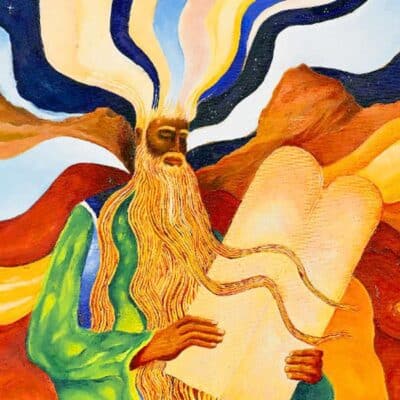
Then God spoke all these words: I am the Lord your God, who brought you out of the land of Egypt, out of the house of slavery; you shall have no other gods before me. You shall not make for yourself an idol, whether in the form of anything that is in heaven above, or that is on the earth beneath, or that is in the water under the earth. You shall not bow down to them or worship them; for I the Lord your God am a jealous God, punishing children for the iniquity of parents, to the third and the fourth generation of those who reject me, but showing steadfast love to the thousandth generation of those who love me and keep my commandments. You shall not make wrongful use of the name of the Lord your God, for the Lord will not acquit anyone who misuses his name. Remember the sabbath day, and keep it holy. Six days you shall labor and do all your work. But the seventh day is a sabbath to the Lord your God; you shall not do any work—you, your son or your daughter, your male or female slave, your livestock, or the alien resident in your towns. For in six days the Lord made heaven and earth, the sea, and all that is in them, but rested the seventh day; therefore the Lord blessed the sabbath day and consecrated it.

Honor your father and your mother, so that your days may be long in the land that the Lord your God is giving you. You shall not murder. You shall not commit adultery. You shall not steal. You shall not bear false witness against your neighbor. You shall not covet your neighbor’s house; you shall not covet your neighbor’s wife, or male or female slave, or ox, or donkey, or anything that belongs to your neighbor.

Psalm 19

The heavens are telling the glory of God; and the firmament proclaims his handiwork.

Day to day pours forth speech, and night to night declares knowledge.

There is no speech, nor are there words; their voice is not heard;

yet their voice goes out through all the earth, and their words to the end of the world. In the heavens he has set a tent for the sun,

which comes out like a bridegroom from his wedding canopy, and like a strong man runs its course with joy.

Its rising is from the end of the heavens, and its circuit to the end of them; and nothing is hid from its heat.

The law of the Lord is perfect, reviving the soul; the decrees of the Lord are sure, making wise the simple;

the precepts of the Lord are right, rejoicing the heart; the commandment of the Lord is clear, enlightening the eyes;

the fear of the Lord is pure, enduring forever; the ordinances of the Lord are true and righteous altogether.

More to be desired are they than gold, even much fine gold; sweeter also than honey, and drippings of the honeycomb.

Moreover by them is your servant warned; in keeping them there is great reward.

But who can detect their errors? Clear me from hidden faults.

Keep back your servant also from the insolent; do not let them have dominion over me. Then I shall be blameless, and innocent of great transgression.

Let the words of my mouth and the meditation of my heart be acceptable to you, O Lord, my rock and my redeemer.

1 Corinthians 1:18-25

For the message about the cross is foolishness to those who are perishing, but to us who are being saved it is the power of God. For it is written, “I will destroy the wisdom of the wise, and the discernment of the discerning I will thwart.” Where is the one who is wise? Where is the scribe? Where is the debater of this age? Has not God made foolish the wisdom of the world? For since, in the wisdom of God, the world did not know God through wisdom, God decided, through the foolishness of our proclamation, to save those who believe. For Jews demand signs and Greeks desire wisdom, but we proclaim Christ crucified, a stumbling block to Jews and foolishness to Gentiles, but to those who are the called, both Jews and Greeks, Christ the power of God and the wisdom of God. For God’s foolishness is wiser than human wisdom, and God’s weakness is stronger than human strength.

John 2:13-22

The Passover of the Jews was near, and Jesus went up to Jerusalem. In the temple he found people selling cattle, sheep, and doves, and the money changers seated at their tables. Making a whip of cords, he drove all of them out of the temple, both the sheep and the cattle. He also poured out the coins of the money changers and overturned their tables. He told those who were selling the doves, “Take these things out of here! Stop making my Father’s house a marketplace!” His disciples remembered that it was written, “Zeal for your house will consume me.” The Jews then said to him, “What sign can you show us for doing this?” Jesus answered them, “Destroy this temple, and in three days I will raise it up.” The Jews then said, “This temple has been under construction for forty-six years, and will you raise it up in three days?” But he was speaking of the temple of his body. After he was raised from the dead, his disciples remembered that he had said this; and they believed the scripture and the word that Jesus had spoken.

Tuesday, February 2, 2021

The Lectionary Passages for Sunday, February 7, 2021 (5th Sunday after Epiphany)


Below are NRSV translations of the lessons from the Old Testament (Isaiah 40:21-31), the Psalms (Psalm 147:1-11, 20c), the Letters (1 Corinthians 9:16-23) and the Gospels (Mark 1:29-39). Please make any comments concerning the passages you want. Together, let's discuss the Word of God.

Isaiah 40:21-31

Have you not known? Have you not heard? Has it not been told you from the beginning? Have you not understood from the foundations of the earth? It is he who sits above the circle of the earth, and its inhabitants are like grasshoppers; who stretches out the heavens like a curtain, and spreads them like a tent to live in; who brings princes to naught, and makes the rulers of the earth as nothing. Scarcely are they planted, scarcely sown, scarcely has their stem taken root in the earth, when he blows upon them, and they wither, and the tempest carries them off like stubble. To whom then will you compare me, or who is my equal? says the Holy One. Lift up your eyes on high and see: Who created these? He who brings out their host and numbers them, calling them all by name; because he is great in strength, mighty in power, not one is missing.

Why do you say, O Jacob, and speak, O Israel, “My way is hidden from the Lord, and my right is disregarded by my God”? Have you not known? Have you not heard? The Lord is the everlasting God, the Creator of the ends of the earth. He does not faint or grow weary; his understanding is unsearchable. He gives power to the faint, and strengthens the powerless. Even youths will faint and be weary, and the young will fall exhausted; but those who wait for the Lord shall renew their strength, they shall mount up with wings like eagles, they shall run and not be weary, they shall walk and not faint.

Psalm 147:1-11, 20c

Praise the Lord! How good it is to sing praises to our God; for he is gracious, and a song of praise is fitting.

The Lord builds up Jerusalem; he gathers the outcasts of Israel.

He heals the brokenhearted, and binds up their wounds.

He determines the number of the stars; he gives to all of them their names.

Great is our Lord, and abundant in power; his understanding is beyond measure.

The Lord lifts up the downtrodden; he casts the wicked to the ground.

Sing to the Lord with thanksgiving; make melody to our God on the lyre.

He covers the heavens with clouds, prepares rain for the earth, makes grass grow on the hills.

He gives to the animals their food, and to the young ravens when they cry.

His delight is not in the strength of the horse, nor his pleasure in the speed of a runner;

but the Lord takes pleasure in those who fear him, in those who hope in his steadfast love.

Praise the Lord!

1 Corinthians 9:16-23

If I proclaim the gospel, this gives me no ground for boasting, for an obligation is laid on me, and woe to me if I do not proclaim the gospel! For if I do this of my own will, I have a reward; but if not of my own will, I am entrusted with a commission. What then is my reward? Just this: that in my proclamation I may make the gospel free of charge, so as not to make full use of my rights in the gospel.

For though I am free with respect to all, I have made myself a slave to all, so that I might win more of them. To the Jews I became as a Jew, in order to win Jews. To those under the law I became as one under the law (though I myself am not under the law) so that I might win those under the law. To those outside the law I became as one outside the law (though I am not free from God’s law but am under Christ’s law) so that I might win those outside the law. To the weak I became weak, so that I might win the weak. I have become all things to all people, that I might by all means save some. I do it all for the sake of the gospel, so that I may share in its blessings.

Mark 1:29-39

As soon as they left the synagogue, they entered the house of Simon and Andrew, with James and John. Now Simon’s mother-in-law was in bed with a fever, and they told him about her at once. He came and took her by the hand and lifted her up. Then the fever left her, and she began to serve them.

That evening, at sundown, they brought to him all who were sick or possessed with demons. And the whole city was gathered around the door. And he cured many who were sick with various diseases, and cast out many demons; and he would not permit the demons to speak, because they knew him. In the morning, while it was still very dark, he got up and went out to a deserted place, and there he prayed. And Simon and his companions hunted for him. When they found him, they said to him, “Everyone is searching for you.” He answered, “Let us go on to the neighboring towns, so that I may proclaim the message there also; for that is what I came out to do.” And he went throughout Galilee, proclaiming the message in their synagogues and casting out demons.

Saturday, September 12, 2020

A Season of Peace: Saturday, September 12

Wrestling with Toxic Masculinity 

Peace Within

 Rev. Carl Horton

1 Corinthians 13:4–8

 Love is patient; love is kind; love is not envious or boastful or arrogant or rude. It does not insist on its own way; it is not irritable or resentful; it does not rejoice in wrongdoing, but rejoices in the truth. It bears all things, believes all things, hopes all things, endures all things. Love never ends. But as for prophecies, they will come to an end; as for tongues, they will cease; as for knowledge, it will come to an end. (NRSV)

Reflection: I recently saw a TV ad for some sort of supplement with the lead line, “Man up, America!” The narrator’s voice had the tone and tenor of a World Wrestling Federation match announcer. “Guys,” he growled, “this is no time to be soft. Maximize your masculinity.”

From an early age, we are the recipients of a societal, slow-drip infusion of messages telling us what we are supposed to be like, look like and act like. Sometimes these messages are like foghorns: blasts of noise intruding in a commercial. More often, though, they are imperceptible and pernicious whispers that seep into our consciousness, needling our sense of self and scratching at the surface of our identities. Over time, their corrosive accumulation can become toxic.

We are in a time of reckoning for the societal structures and norms that have been in place up until now. Call it a shift, an earthquake, or an awakening, but 2020 seems like a socially-distanced “come to Jesus” year. Much of what we have accepted as “normal” is not and should not be “normative.” The curtain is being pushed away, the monuments are being pulled down, and power structures of the past are being revealed as fraudulent and certainly not “of God.” If anything, I think we’re being called not to “man up” but to “man down.”

Over time, our understandings of gender are deepening and the ideals of masculinity and femininity are cracking, opening up room for myriad expressions of our true selves. If we maximize anything, let us maximize the peace within that comes from loving ourselves kindly as the complete persons God has created us to be. Confidence in God’s vision for us goes much farther than any supplement.

Practice for Peacemakers: Consider an aspect of your identity that doesn’t “conform” to societal norms or expectations. Embrace, accept, love and thank God for that “nonconforming” part of yourself.

Prayer: God of love, turn us from conformity toward authenticity and help us love — even ourselves — as you would have us love. Amen.


Carl Horton serves in Louisville, KY, as coordinator of the Presbyterian Peacemaking Program.


This year’s Season of Peace Resources are designed to help participants explore practices for building peace on every scale. From the personal level to global issues, these reflections and prayers will help grow the faith and witness of the whole church. Throughout the 29 days of  the 2020 Season of Peace, we are invited to reflect upon:

Week 1 September 6–12: Peace Within
Week 2 September 13–19: Peace in Relationships
Week 3 September 20–26: Peace in Community
Week 4 September 27–October 3: Peace in the World
Final Day October 4: Holistic Peacemaking

Saturday, June 13, 2020

Sunday's Sermon - Love Is...


During the summer of 2017, I preached a series of sermons entitled "Living by the Spirit." Although God has called us and filled us with the Spirit, often our lives don’t actually reflect his presence. Of course, that doesn’t stop us from talking about it and claiming to understand how to get it and even judging whether or not others have got it. This we do often and well. What we’re not so good at doing is living it, in other words, living by the Holy Spirit. And that’s what we’re going to talk about this summer, how we might demonstrate the presence of God through our lives. Using Galatians 5:22-26, we’ll consider the following topics:
✙ Those who live by the Spirit...
✙ Those who live by the Spirit demonstrate love.
✙ Those who live by the Spirit feel joy.
✙ Those who live by the Spirit work for peace.
✙ Those who live by the Spirit have patience.
✙ Those who live by the Spirit show kindness.
✙ Those who live by the Spirit practice generosity.
✙ Those who live by the Spirit understand faithfulness.
✙ Those who live by the Spirit exhibit gentleness.
✙ Those who live by the Spirit have self-control.

Below is a copy of the second message in this series sermon.


As I hope some of y’all remember, last week we started a new series dealing with how we as Christians can reflect the Holy Spirit to the world around us. And to do that, we’re going to use a little of what Paul wrote to the Galatians as a guide: “...the fruit of the Spirit is love, joy, peace, patience, kindness, generosity, faithfulness, gentleness, and self-control. There is no law against such things.” [Galatians 5:22b-23] You see, showing these traits is really what living by the Spirit is all about.
But before getting into all this good stuff, we started this series by talking about the “what not to do,” the kind of life-style Paul called “the works of the flesh.” And during our time last week, we discussed how folks sometime misuse the freedom they’ve been given, and that’s the reason a person might slip into this kind of mess. And then we talked about how a flesh-centered life is shown by some very definite signs, you know, like “...fornication, impurity, licentiousness, idolatry, sorcery, enmities, strife, jealousy, anger, quarrels, dissensions, factions, envy, drunkenness, carousing, and things like these.” [Galatians 5:19b-21a] And we tied it up by considering the results that always come from this kind of thing, and I’m talking about broken relationships with God and with one another. Therefore, we need to do whatever we can to avoid giving into the desires of the flesh. Now that’s what we talked about last week.

And so, with all that behind us, this morning we’re going to start looking at what living by the Spirit is all about, namely those fruits that God has planted within us and that we can allow to grow. And the first one is love. Of course, that’s not a surprise. I mean, even though Christians past and present
have been less than compassionate and merciful, especially to people and cultures that they considered strange and different, I think we all know that love should still be a big deal for believers. I mean, I think Jesus might have agreed with John Lennon when he sang “All you need is love.”
But I’ll tell you, when I think about love, it’s not The Beatles song that comes to mind first. Instead it’s those little “Love is...” cartoons that I remember seeing everywhere when I was in high school. Of course, they’re still being published, but I haven’t seen them for years. And as I remember, once you got past the fact that they looked like two naked children, I think some of them were kind of funny. And some of the were extremely cute. And some of them, well, they were really sad. Of course, I don’t think you’d strain any brain cells on any of them.

But, you know, it’s the two words up on the top of all of them, you know, “love is,” well, those words are really important, or at least they should be, especially for us as Christians. And so, for a few minutes, we’re going to look at what Paul had in mind when he wrote that love is the first fruit of the Spirit and for that reason, is probably the first thing we might want to get down if we’re serious about living a spirit-filled life. And I’ll tell you, when you look at what Paul wrote, I think there are two things he said about love  that are different from what we generally think. Of course, I have no idea about what he’d draw if he were cartoonist, but I believe I’m on pretty solid ground about what he’d write if he were here today.

For example, I think the first thing Paul would say is that love is a decision. It’s a conscious decision on the part of the one doing the loving. I mean just listen to what he wrote to the Corinthians, and this by-the-way is called the love chapter, something couples want read at most of the weddings I do. He wrote, and I’m reading this from The Message: “If I speak with human eloquence and angelic ecstasy but don’t love, I’m nothing but the creaking of a rusty gate. If I speak God’s Word with power, revealing all his mysteries and making everything plain as day, and if I have faith that says to a mountain, ‘Jump,’ and it jumps, but I don’t love, I’m nothing. If I give everything I own to the poor and even go to the stake to be burned as a martyr, but I don’t love, I’ve gotten nowhere. So, no matter what I say, what I believe, and what I do, I’m bankrupt without love. 
Love never gives up. 
Love cares more for others than for self. 
Love doesn’t want what it doesn’t have. 
Love doesn’t strut, 
Doesn’t have a swelled head, 
Doesn’t force itself on others, 
Isn’t always ‘me first,’ 
Doesn’t fly off the handle, 
Doesn’t keep score of the sins of others, 
Doesn’t revel when others grovel, 
Takes pleasure in the flowering of truth, 
Puts up with anything, 
Trusts God always, 
Always looks for the best, 
Never looks back, 
But keeps going to the end. 
Love never dies.” [1 Corinthians 13:1-8a] Now that’s what he wrote.

And I’ll tell you, that seems a lot different from the way love is viewed in our society. I mean, based on what you see in movies and on television, in books and on billboards, in advertising and my gosh, printed on Hallmark cards, love is all about feeling, isn’t it? It’s liking on vitamins, but not steroids; that would be passion. It’s something that can make you feel deliriously happy or unspeakably sad or incredibly angry. I’ll tell you, it leads people to think that they’ve made either the absolute best or the absolute worse decision of their entire lives, and they feel that as they’re looking at the same exact person but at different times of the day. You see, I think this is the way we tend to view love, one that’s certainly mentioned in scripture whenever the Greek word φιλεω is used. But let’s face it, as applied in our world, it has more to do with Madison Avenue than the Bible.

But of course, that’s not the Greek word Paul used either in what he wrote to the Galatians or the Corinthians. Instead, he used the word ἀγαπη, and my friends, that kind of love is a decision. In other words, it doesn’t just happen. It’s not something you fall into or that hits you like a ton of bricks. It takes effort, because it’s not always easy to be patient and kind. And there are times when jealousy and envy and arrogance seem the way to go. And this business about bearing and believing and hoping and enduring all things, don’t tell me that’s a cinch, because it’s not. No, it takes work to show the kind of love about which Paul wrote. But with enough effort it’s possible, if we decide to do it, something that may be impossible if love is all about how we feel. And something else, if love is just our emotions, it’s ridiculous to say that we can love people we don’t like. But if it’s about a decision, well, we can even do what Jesus told us to do, and I’m talking about when he said, “But I say to you, Love your enemies and pray for those who persecute you...” [Matthew 5:44] You see, we don’t have to like our enemies; we just need to show love to them. And that we can do, because, for Paul, first, love is a decision.
And this business about Jesus telling us to love, well, that really leads to the second thing love is. For Paul, not only is it a decision, love is also an obligation. In other words, it’s our responsibility as followers of Jesus Christ. And this is something that’s really clear in what he wrote to the Romans. Paul said, “Let love be genuine; hate what is evil, hold fast to what is good; love one another with mutual affection; outdo one another in showing honor. Do not lag in zeal, be ardent in spirit, serve the Lord. Rejoice in hope, be patient in suffering, persevere in prayer. Contribute to the needs of the saints; extend hospitality to strangers. Bless those who persecute you; bless and do not curse them. Rejoice with those who rejoice, weep with those who weep. Live in harmony with one another; do not be haughty, but associate with the lowly; do not claim to be wiser than you are. Do not repay anyone evil for evil, but take thought for what is noble in the sight of all.” [Romans 12:9-17] Now I want you to notice that he didn’t say “I’d like you to contribute to the needs of the saints, if you have a little extra this month.” And he didn’t say, “If you’re able, it might be a good idea to bless those who persecute you” And he didn’t say, “Wouldn’t it be neat if we all could live in harmony with one another?” He didn’t say that, but I think most of us kind of wish he did, because, in our world, love is generally seen as an option, you know, something you do if you’re feeling it. And if you’re not, well, sorry about your luck.

But that’s sure not the way Paul described it. Love is something we’re expected to do. But even that’s too soft; it’s something we’re commanded to do. It’s like he wrote to the Galatians, a passage we talked a little bit about last week: “For you were called to freedom, brothers and sisters; only do not use your freedom as an opportunity for self-indulgence, but through love become slaves to one another. For the whole law is summed up in a single commandment, ‘You shall love your neighbor as yourself.’ If, however, you bite and devour one another, take care that you are not consumed by one another.” [Galatians 5:13-15] We’re obligated to love others. And of course, this command to love, man, it comes from the highest authority of all. Jesus said, “I give you a new commandment, that you love one another. Just as I have loved you, you also should love one another. By this everyone will know that you are my disciples, if you have love for one another.” [John 13:34-35] And I’ll tell you, that really points to why it’s so important for us to love. It’s like Jesus said, “By this everyone will know that you are my disciples, if you have love for one another.” You see, since it’s our job is to bear witness to Jesus Christ and to make disciples of all nations, our decision to love is absolutely crucial. It’s the way we show the world who we are.


To love others isn’t optional; it’s not a choice. Love is a commandment. Love is an obligation.

Now I’ve got to confess, I kind of like those “Love is” cartoons. And maybe it’s because some of them move past that mushy kind of love that’s so popular in our culture. But regardless of how you feel about the cartoons, I think Paul’s understanding of love is clear. You see, for him, love is a decision, not a feeling. And love is an obligation, not an option. And when we claim this vision, then we just may be taking the first step in living by the Spirit. Now we’re going to make a change at the end, one I thought about last night as I was finishing the sermon. Instead of singing the hymn that’s in the bulletin, we’re going to sing the song we just heard. Now it’ll be up on the screen.


Tuesday, April 14, 2020

A New Devotion - Our Reason for Hope

Here's a new devotion that I wrote. You can find a recording of this devotion at the bottom of the page.

1 Corinthians 15:12-28

Easter celebrates hope of the Resurrection | Jesus painting, Jesus ...If we preach that Christ was raised from death, how can some of you say that the dead will not be raised to life? If they won’t be raised to life, Christ himself wasn’t raised to life. And if Christ wasn’t raised to life, our message is worthless, and so is your faith. If the dead won’t be raised to life, we have told lies about God by saying that he raised Christ to life, when he really did not.

So if the dead won’t be raised to life, Christ wasn’t raised to life. Unless Christ was raised to life, your faith is useless, and you are still living in your sins. And those people who died after putting their faith in him are completely lost. If our hope in Christ is good only for this life, we are worse off than anyone else.

But Christ has been raised to life! And he makes us certain that others will also be raised to life. Just as we will die because of Adam, we will be raised to life because of Christ. Adam brought death to all of us, and Christ will bring life to all of us. But we must each wait our turn. Christ was the first to be raised to life, and his people will be raised to life when he returns. Then after Christ has destroyed all powers and forces, the end will come, and he will give the kingdom to God the Father.

Christ will rule until he puts all his enemies under his power, and the last enemy he destroys will be death. When the Scriptures say that he will put everything under his power, they don’t include God. It was God who put everything under the power of Christ. After everything is under the power of God’s Son, he will put himself under the power of God, who put everything under his Son’s power. Then God will mean everything to everyone.

Our Reason for Hope

Now-a-days, hope would seem to be in short supply. I mean, we’re in the middle of a pandemic. People are getting sick, and they’re losing their jobs and their insurance. And at the moment, things appear to be getting worst. There just doesn’t seem to be a light at the end of this tunnel; there just doesn’t seem to be any clear end in sight. And to make matter worst, many of our leaders seem to be far more interested in avoiding responsibility and scoring popularity points than getting the folks they were elected to serve through this crisis. Instead of vision, we get excuses. Instead of unity, we see divisions. And because of that, it’s really not surprising that a lot of people are just plain losing hope for both themselves and their families.

But in the middle of this mess, there is a reason to hope. A few days ago, we celebrated Easter, the day we remember the resurrection of Jesus. And I’ll tell you, that resurrection reminds us that the last word won’t be given by viruses nor politicians nor even death itself. No, God is in control. You see, we can find our destiny in that empty tomb. And even though it might not be easy or painless, God will get us through all this. And regardless of what happens along the way, we have good reason to believe that our future is going to be glorious. You see, we can trust in God; he is our reason for hope.


WCC news: WCC conveys heartfelt prayers to Pope Leo XIV

World Council of Churches general secretary Rev. Prof. Dr Jerry Pillay conveyed heartfelt prayers, fraternal solidarity, and warmest wishes ...