Saturday, October 3, 2020

A Season of Peace: Saturday, October 3


Rooting for China

 Peace in the World

 Randall Stone

 Matthew 5:9

“Blessed are the peacemakers, for they will be called children of God.” (NRSV)

 Reflection: To many, China has become a disquieting word within American political and economic discourse. Pundits and politicians worry about the time, coming soon, when the U.S. economy will no longer be the largest on the planet. Some analysts point to historical parallels, suggesting that war is likely during a power transition. Presidential candidates charge each other with being “soft” on China, as they once did in reference to the Soviet Union. Indeed, China offers a troubling image as a repressive regime that tramples the rights of ethnic groups and citizens of Hong Kong, and that is becoming more belligerent towards its neighbors. Avoiding violent conflict with China may not be easy, but it is essential.

Peacemaking requires hard work, starting with a shift in perspective that takes us away from realpolitik and focuses instead on shared goals and the necessary conditions to achieve those goals. To start: it’s important to remember that the world needs China. China will be an essential partner in current and future struggles with climate change and infectious diseases. The dynamism and innovation of the world economy depend on engaging the talents of all of the world’s people, which requires open markets and the exchange of ideas. There are no attractive future scenarios without peaceful coexistence with China.

Second, the alternative to China becoming the largest economy in the world is to keep one-fifth of the world’s population in permanent poverty. China has a population of 1.4 billion, so its economy will surpass the size of the U.S. economy when it reaches roughly 23% of the U.S. standard of living. China’s economic growth has been impressive, but it started from a low level: 88% of China’s population was under the international poverty line in 1980. China has been returning to its historical share of world GDP after recovering from a series of disasters in the 20th Century — civil war, invasion during World War II and economic mismanagement and famine under communism — which had reduced most of its population to subsistence agriculture. Raising 850 million people out of poverty yielded impressive growth rates, but still leaves China a poor country with about one-sixth the U.S. level of per capita income. We should be rooting for the people of China, encouraging their rise out of poverty even as we encourage their government to relax its iron grip of control over them.

Third, U.S. supremacy is not a necessary condition for sustained peace, nor is it sufficient to guarantee security. In fact, the effort to maintain a temporary advantage may well undermine world order. In the long run, a peaceful world is hard to envisage without multilateral cooperation that allows all of its peoples to strive for development.

Practice for Peacemakers: Read an article in an international newspaper, and try to put yourself in the writer’s perspective. It is good to regularly leave your comfort zone and challenge some of your assumptions.

 Prayer: God, free us from the idolatry of trusting in power for our safety. Free us from the sin of fear: fear of others, fear of loss of control, fear of the future. Grant us the courage to engage in the hard work of negotiating fair and equitable settlements that allow room for all of your people to reach their full potential.
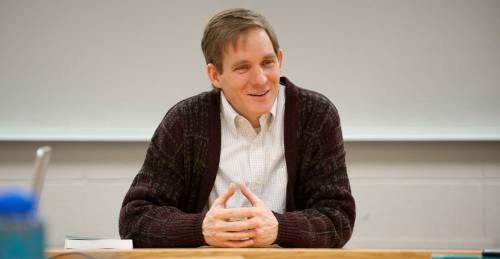
 

Randall Stone is a professor of political science at the University of Rochester and the author of books and articles on international relations. He is a member of Henrietta United Church of Christ and treasurer of Genesee Area Campus Ministries.


This year’s Season of Peace Resources are designed to help participants explore practices for building peace on every scale. From the personal level to global issues, these reflections and prayers will help grow the faith and witness of the whole church. Throughout the 29 days of  the 2020 Season of Peace, we are invited to reflect upon:

Week 1 September 6–12: Peace Within
Week 2 September 13–19: Peace in Relationships
Week 3 September 20–26: Peace in Community
Week 4 September 27–October 3: Peace in the World
Final Day October 4: Holistic Peacemaking

Friday, October 2, 2020

A Thought from the Word


A brief thought based on Matthew 5:11-12 - God will bless you when people insult you, mistreat you, and tell all kinds of evil lies about you because of me. Be happy and excited! You will have great reward in heaven. People did these same things to the prophets who lived long ago

A Season of Peace: Friday, October 2

Liberty and Justice for All

 Peace in the World

 Rev. Dr. Marvin McMickle

Amos 5:23-24

 “Take away from me the noise of your songs; I will not listen to the melody of your harps. But let justice roll down like waters, and righteousness like an everflowing stream.” (NRSV)

Reflection: I am reflecting on justice, long before you will read it, and wonder whether we will remember the intensity of this moment.

I am reflecting on justice while people across the United States and around the world are filling the streets, in outrage following the death of George Floyd, who was murdered when a Minneapolis police officer pressed his knee into Floyd’s neck for eight minutes and 46 seconds. Part of what is fueling those protests are the deaths of Ahmaud Arbery, who was shot and killed in Brunswick, Ga., while jogging, and Breonna Taylor, who was shot eight times and killed by police officers when they burst into her apartment in Louisville, Ky., in a case of mistaken identity. What meaning can peacemaking possibly have in such a circumstance — other than to unravel these patterns of violence and replace injustice with justice?

I am reflecting on justice only days after the president of the United States instructed his attorney general to clear the streets of peaceful protesters, which was done by the use of tear gas, rubber bullets, mounted police and police batons used to push people from Lafayette Park. This was done so the president could stand in front of a church he did not enter and hold up a Bible from which he did not read! God will have none of such noise and melodies.

But, if you listen to and remember the chants that have risen from the streets of this country, you will hear what justice means. Justice means the full enforcement of the provision of the 14th Amendment to the U.S. Constitution, which guarantees “equal protection under the law.” Justice means the full embrace of the language of the Pledge of Allegiance’s promise of “liberty and justice for all.” Justice means not only living up to the language in the Declaration of Independence that “all men are created equal,” but also agreeing that the promise extends to men, women, nonbinary people, and indeed to all people, regardless of creed, color or identity. Justice is necessary for peace.

As we consider making peace in the world, we must remember too that the wider world has wisdom for peacemaking that applies to us. The United States, just like ancient Israel, is guilty of ignoring its own foundational laws that were designed to create a just and equitable society. Even as we may protest and boycott systems of oppression and apartheid in the world, we must have the humility to accept similar judgment.

Justice and peace cannot come, at home or abroad, unless we live up to our highest ideals of equality and self-improvement. In order to build peace, it is time that we do justice.

Practice for Peacemakers: Consider the ways in which self-glorification gets in the way of justice in your life, and in the life of our country as a force for or against peace. Reread the Declaration of Independence (or the Bill of Rights, or another founding document) and reflect on the aspirations and the failures of the vision for justice at that point in time. Where have we failed to realize the vision’s original potential, and where have we moved that vision forward? Write down your thoughts and share them with others in your church or community, asking them to do the same. Then use those thoughts as a starting point in your local activism.

Prayer: Dear God, as we strive to be peacemakers in your world, remind us to listen. Let us not sing songs of self-praise, but instead let your justice roll over us like an ever-flowing stream, guiding us on a path that washes away the structures and systems which hold injustice in place.


Now retired and living happily in Shaker Heights, OH, the Rev. Dr. Marvin McMickle served for many years in different roles: as president, as professor of African American religious studies, and as director of the Doctor of Ministry Program at Colgate Rochester Crozer Divinity School.


This year’s Season of Peace Resources are designed to help participants explore practices for building peace on every scale. From the personal level to global issues, these reflections and prayers will help grow the faith and witness of the whole church. Throughout the 29 days of  the 2020 Season of Peace, we are invited to reflect upon:

Week 1 September 6–12: Peace Within
Week 2 September 13–19: Peace in Relationships
Week 3 September 20–26: Peace in Community
Week 4 September 27–October 3: Peace in the World
Final Day October 4: Holistic Peacemaking


Sightings - What’s getting me through these days

Three tested tactics

by Ken Rummer

I’m a small child in a crib, struggling to breathe in the night, clogged up with what will turn out to be allergies and asthma. My crying rouses my parents who take turns responding. 

Being picked up and held vertically helps. I can breathe better and settle a bit. 

Back in the crib, I’m feeling the congestion return, cutting off the air. Again I’m crying. Again a parent comes in.

After several trips, my father says they can’t keep doing this. He returns me to the crib, says a prayer putting me in God hands, and goes back to bed. My crying does not bring another parent visit.   

The memory of that night came back to me recently when I made of list of difficult times in my life. What’s getting you through these pandemic days was the question, and I thought I’d see what had helped get me through hard days before.

Out of that inventory, I identified three tactics that have helped me in challenging times, and more than once. You’re welcome to borrow any or all. 

1. Resync With Music

In high school I played violin in a baroque musical ensemble—strings, recorders, harpsichord, lacy neckwear, knee britches. I noticed that after two hours of rehearsing Bach and Vivaldi, my unfinished homework had quit shouting at me. Somehow the ordered notes had restored my inner order, and I drove home feeling more calm.

Presently I’m playing beginner piano most days. When my fingers are on the keys, I’m not thinking about pandemics and worst-case scenarios and push-my-buttons posts on social media. And I’m feeling less anxious.

Cue up your favorite playlist. Take up a new instrument. Stream a concert by your favorite group. You may discover that your scattered fragments are finding their places. Engaging with music can do that.

2. Refocus With Projects

Another tested tactic for difficult days is taking on a project. An out-of-state move in the middle of high school shook my foundations. But building a two-person sailboat with my dad that year filled a lot of empty places. Even when the waves were sloshing into our open pontoons.

Currently, my wife and I are sorting pictures and adding captions for a photo book. The oldest grandchild just turned ten, so we are attempting a ten-year book featuring our four grandchildren.

Maybe for you it’s quilting, or turning all the flour in your pantry into baked goods, or applying the principles of tidying to your closet. Or painting your family room, or laying pavers for a new patio, or getting that old mower running that hasn’t started in two years.

Tackling a project paints a goal line out in the future, but not too far. Measured in days, a project takes the mind off uncertain months and years. And you can mark your progress.

3. Rebalance With Faith

Reaching out to God is another of my tested tactics for getting through a difficult season. In the uncertainties of the present pandemic, an affirmation passed down through my faith tradition points to my deepest deep-down hope: in life and in death we belong to God. 

I first leaned on this and found it strong, as that small child struggling to breathe in the night. My parents had done all they knew how to do and they put me in God’s hands. Scared and exhausted, I finally did the same.

Not knowing if I would wake up again, I reached out to the God in whom my parents trusted, and went to sleep. 

Whatever your religious identity and commitment, you may find, digging down into your beliefs, something or someone you can trust come what may. Stand there, on that bedrock of your faith. It’s a way to regain your balance, even in these days.


Ken Rummer writer

Ken Rummer, Teaching Elder PCUSA, Honorably Retired

Ken Rummer writes about life and faith from the middle of Iowa by the High Trestle Trail. Previous posts are available at http://presbyterianmission.org/today/author/krummer

Thursday, October 1, 2020

A New Devotion - Rethinking the Rules

Here's a new devotion that I wrote. You can find a recording of this devotion at the bottom of the page.

Luke 6:1-11

One sabbath while Jesus was going through the grainfields, his disciples plucked some heads of grain, rubbed them in their hands, and ate them. But some of the Pharisees said, "Why are you doing what is not lawful on the sabbath?" Jesus answered, "Have you not read what David did when he and his companions were hungry? He entered the house of God and took and ate the bread of the Presence, which it is not lawful for any but the priests to eat, and gave some to his companions?" Then he said to them, "The Son of Man is lord of the sabbath."

On another sabbath he entered the synagogue and taught, and there was a man there whose right hand was withered. The scribes and the Pharisees watched him to see whether he would cure on the sabbath, so that they might find an accusation against him. Even though he knew what they were thinking, he said to the man who had the withered hand, "Come and stand here." He got up and stood there. Then Jesus said to them, "I ask you, is it lawful to do good or to do harm on the sabbath, to save life or to destroy it?" After looking around at all of them, he said to him, "Stretch out your hand." He did so, and his hand was restored. But they were filled with fury and discussed with one another what they might do to Jesus.

Rethinking the Rules

According to the Evangelist Luke, the scribes and the Pharisees completely missed the boat. In both cases, they were so bound to their interpretation of the law that they missed the big picture. You see, they were totally focused on the sabbath rules, you know, on how many heads of grain a guy should pluck and eat or whether a person with a disability should be healed immediately or told to wait another day. In fact, their focus was so complete, that they actually lost the plot, that the Son of Man was the Lord of the sabbath and that the rules were suppose to guide them to do good and not harm. Of course, this was exactly what Jesus had in mind when he said a little bit later in the story that the entire law could be summarized by two commands: love God and love neighbor. And if a person was applying the law in such a way that it didn’t reflect love, that person was simply misinterpreting the law. But the Pharisees and scribes in the story we just read didn’t understand that. And so, when they saw that Jesus had broken the rules by doing something good, they became so angry that they decided that he had to go.

And I’ll tell you, if we’re not careful, we can fall into this pharisaic trap ourselves, focusing on the letter while missing the intent. And for the reason, it just makes sense to reevaluate those laws that we’ve developed and adopted as Christians, rules that we apply to ourselves and others. You see, periodically, maybe we should look at those things that we believe all Christians should follow, with both honesty and faith, ask ourselves and God if our application reflects kindness and compassion. And if it does, then our interpretation is solid, but if it doesn’t, maybe we should rethink the rules.


A Thought from the Word


A brief thought based on Philippians 1:9-10a - I pray that your love will keep on growing and that you will fully know and understand how to make the right choices. Then you will still be pure and innocent when Christ returns.

A Season of Peace: Thursday, October 1


Peacemaking Demands Justice, Not Domination

 Peace in the World

 Ron Stone

 Luke 14:31–2; 19:41–2

“Or what King, going out to wage war against another king, will not sit down first and consider whether he is able … to oppose the one who comes against him … ? If he cannot, then, while the other is still far away, he sends a delegation and asks for terms of peace….

As he came near and saw the city [Jerusalem], he wept over it, saying, “If you, even you had only recognized on this day the things that make for peace!” (NRSV)

Reflection: As the Peacemaking Program celebrates its 40th anniversary, it is good to remember that it grew out of concerns about American foreign policy. The Peacemaking Program’s Founding Document was prepared in the optimism for peacemaking of Advent, 1979. However, the General Assembly’s adoption of “Peacemaking: the Believer’s Calling” in 1980 was followed by an election that led to a massive armament program. Since that time, American policy has repeatedly utilized superior armaments and the threat of nuclear weapons to dominate others. It is time to come to terms with the fact that U.S. foreign policy has long emphasized domination over peacemaking.

Over the years, diplomacy of the sort that Luke calls for has saved us from many wars and even reduced our nuclear arsenals. But developments in the Middle East and our own shortsightedness have drawn us into unending struggles in Iraq, Syria, Afghanistan and Iran, even though we know wars in Asia, with its multitudes of unknown religions and folkways, are not good projects for the U.S. We need to sit down and negotiate with our present and our potential enemies.

Peace for Jerusalem is as far away as it was for Jesus, and as it has been for the United States.  Christian faith has done little for peace in Jerusalem. Neither Jerusalem nor the United States has known much peace during the last 100 years. The preceding 400 years for the Americas was full of wars against indigenous peoples, and the 20th century was a cataclysm of war. The future of peace for Jerusalem requires, as Jesus said, negotiations for the terms of peace. Following Jesus means real terms of peace, however, not domination by a U.S.-supported government. Terrorism arises from any context of occupation, domination and enforced poverty — not simply from fanaticism. To truly be peacemakers in Israel-Palestine, leaders must work toward justice for Israelis and Palestinians alike.

Practice for Peacemakers: Peacemaking by the Church takes work from the ground up. If your church does not yet have a peacemaking committee, create one to discuss issues of witness and foreign policy. This committee can report to session for education and a call to action in the form of public witness, protest or other calls for peace.

Prayer: Jesus, may our church become a supporter of peacemaking in a violent world, learning from you and binding us together in real community actions. Amen.


After 40 years of college, university and seminary teaching, Ron Stone (right) as The John Witherspoon Professor of Christian Ethics at Pittsburgh Theological Seminary in 2005. In the 1970s, he was one of the writers for “Peacemaking: the Believer’s Calling,” and he wrote or edited another two dozen books on social ethics, foreign policy, peacemaking and particularly on the work and thought of Paul Tillich and Reinhold Niebuhr.


This year’s Season of Peace Resources are designed to help participants explore practices for building peace on every scale. From the personal level to global issues, these reflections and prayers will help grow the faith and witness of the whole church. Throughout the 29 days of  the 2020 Season of Peace, we are invited to reflect upon:

Week 1 September 6–12: Peace Within
Week 2 September 13–19: Peace in Relationships
Week 3 September 20–26: Peace in Community
Week 4 September 27–October 3: Peace in the World
Final Day October 4: Holistic Peacemaking

WCC News: WCC joins prayers for peace and stability in Nigeria: “Many voices, one witness”

An ecumenical service in Abuja, Nigeria, on 26 August at All Saints Anglican Church drew church leaders from across the nation. World Counci...